Showing posts with label Economist. Show all posts

Tuesday, 1 September 2015

Super Summer, Super Thursday, Black Monday & End of Brazil's Commodity Cycle

Thursday the 6th of August signalled no change in Bank of England’s interest rate (Currently 0.5%), China’s central bank getting ready to move its weight in the direction of returning to devaluation, in order to boost exports, and from the other side of the Pacific, the looks of the US dollar strength year on year 20% bringing thoughts on the soon to be basis rate increase by the Federal Reserve.

S&P 500 Turmoil 
The major topics to be highlighted here are miscommunication and fundamental problems in the announcement of Central banks in the recent affairs of August.


Carney’s MPC

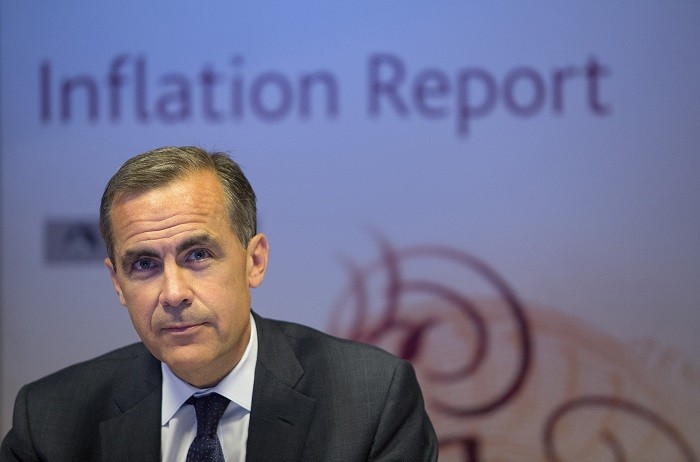
When double the information is released, as well as Mark Carney’s patented monetary trick of forward guidance, a market feels more reassured.

An 8-1 vote amongst the MPC committee, reaffirmed the near whole agreement of the current state of inflation targeting. Not only was the move concrete, it marked also the strength of the Canadian central banker’s hold at sailing the market through unknown hotspots arising.

The Forward guidance Mark Carney delivered was however the thought of many analysts; the UK economy is ‘in need in care’. The absolute truth and gut feeling for the majority, after an interesting summer change in growth levels, they know things could soon spike like a thunderbolt from the heavens, right down to the ground.
Reasons?

Most greatly mentioned is falling commodity prices, leading to lower inflation, also the continuing unknown course within the Euro-zone area, Russia and the slowdown in growth within the Far East and emerging economies. Hopefully due to this Carney could hopefully see the weighing scales to dip on either of the following two.
  •  Most consumers will decide to save, increasing MPS,
  • Consumers will be driven to consume more, due to the fall in production, fall in commodity prices, the price of goods will become less, keeping inflation positive.
As much as the second will help GDP, the first is more of a key issue, when it comes to either stagnation or end of the growth cycle.

Far East Volatility

Last week has been quite the roller coaster ride as Asian Stocks bore a significant plunge in value on Monday, then making a deep recovery by Thursday; Is this the end of Chinese volatility?

Vix Volatility Index S&P 500 

At the beginning of August, The Peoples Bank of China conducted devaluation of their international yuan currency, in order to help boost exports to deal with the crash in the Chinese markets. Though the delivery of the information was poor. The sudden unexpected change in the exchange rate policy, led to market turmoil that only calmed after clarification by the PBOC.

“China will maintain economic operations within a reasonable range”

The initial feel by the markets led to a global selloff of risky assets, as they believed it was a reaction to the abrupt deterioration in Chinese growth.
In the following days, China clarified the message by ensuring that the move they had made in devaluation was designed to

“Enhance market-orientation and benchmark status”.

The acknowledgement of poor communication had the effect of calming the markets, as the above statement gave light to moves the PBOC had made. First their purchasing of currency, the knowledge of $3.6Tr USD being in reserve, as well as US federal reserve rate hikes being on the  horizon soon enough. Domestically also the Renminbi’s real exchange rate has appreciated >25% since 2007.

Forecast

The gut feeling of analysts and my own personal assumptions, are that we can expect a steady slowdown in Chinese growth. This of course, leading to weaker demand in commodities, thereby having a knock-on effect on the Australian economy. At the end meaning, that portfolio diversification is crucial and that we should expect more surprises from China, as they grapple to deal with a crucial situation with their economy.


Economic Forecast: The Weather in Rio is looking bleak

For the body of Christ that towers over Rio, the Brazilian government also sees the world looking down. The country faces the end of its commodity growth cycle; and if that was not enough huge corruption, declining consumer confidence and preparation towards the Olympic Games.

Due to the rise in supply of oil, slowdown in emerging market production levels, and weak capital markets, Brazil is facing a dire position. The major fall of the Petrobas scandal, in its corruption and rescue cost to the economy, has only contributed more to the slowdown in economic growth and widening of the Brazilian deficit.

The situation, began by Brazil revaluating its surplus targets that sparked a selloff of Brazilian assets. Soon enough it led to an announcement by Standard & Poors, warning of the investment status being downgraded.


Brazil is desperately trying to take control of its inflation. In the last seven meetings of Brazil’s central bank, there has been an increase in interest rates each time, which now stands at 14.25%. Coupled together with two consecutive quarters of declining GDP, South America’s largest economy is now in recession.

Wednesday, 27 August 2014

The Scottish Currency and Putin Economics

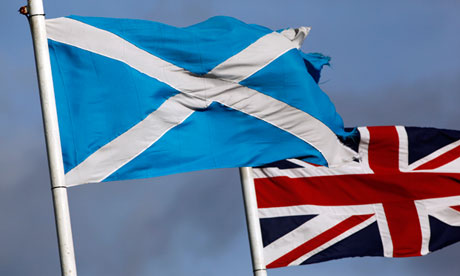
The week beginning was marked with Russia forcing aid into rebel held eastern Ukraine and the Second debate on Scottish independence from the United Kingdom.

Alex Salmond a bachelor of Economics and History, that went on to be leader of the Scottish National Party went against former Chancellor of the Exchequer Alistair Darling in a Televised debate on Monday night.

The debate, was a battle of words, with no answers for many on analysing and interpreting the outcome of Scotland's economy. The major being the currency. Alex Salmond fended off the question, though to many researchers and analysts the answer is a separate diluted currency. With this answer assumed as the most logical for an independent Scottish economy to function, let a alone work, the creation of a currency is inevitable.


The major issue en-laced within the UK government's need is that all UK debt is embedded in valuations of assets, such as assets in Scotland. This would in turn affect the borrowing capabilities and pricing for the remainder of the UK. Though the same would be for Scotland, the Scottish economy would have undertake its share of the debt produced from toxic assets incurred within the financial crisis. This in itself will cause capital flight to likely occur.


How to get the debt from Scotland is more of a major issue that the UK has to figure out, and will markets react to an unsound Scottish balance of payments book? With the quick decision making of the financial markets, and how to justify the information, the risk is acute.


Russia's economy is set for a strong downturn with the economic sanctions taking a deep toll on the balance of payments. Vladimir's game strategy back in march, was very successful as the economic sanctions over Russian influence on Crimea would have lifted and Russian territory would have expanded. It was a great strategic move as the markets saw their financial power see no change in the political strategy of the Kremlin. Though we are nearing September, and long term sanctions are not favourable. Even for a low rouble.


Though with low economic growth for Russia, will it be likely that Putin, takes a more aggressive stance in the Ukraine Crisis? After heightening the tensions with Kiev after sending a large convoy of "Aid" supplies into the rebel stronghold, Russian provocation of the west is becoming less forward strategy.Though a lot of moves made by the Russian premier in March were new out of the rule book.

Looking at the soft and hard currency position. Many companies from and working within Russia,are finding it next to impossible for day to day transactions to be conducted in the Russian Rouble. The oil and gas sector is heavily dependant on outside technology and skills, a major area the economic sanctions are effecting. Companies such as BP who own a major majority of Rosneft(Russian national oil company), are left being unable to transfer income to the UK subsidiaries or supply their projects.

From an investing point of view for game strategy, the likelihood of an escalation occurring even more is inapt. Conciliation of Russia and Ukraine, in order for the easing of economic sanctions is greater probability. However with multiple fields of major medical, civil and political unrest around the continental plate, there is greater chance of the less probable decision occurring, as with widespread risk, there is a greater prospect to get away with more.

Stormy seas ahead G.E.


Thursday, 21 November 2013

A Russian Trade Union, a love story with Ukraine


An interesting new political strategy is happening in Eastern Europe and on the north Asian plateau and it all smells too much like strategic economics again. Russia is moving its economic weight, but this time for a new strategic move of geographic proportion, an expansion into the realm of the trade/Customs union.
The EU is not only a unity of policies, with endless bilateral agreements and an entanglement of laws. Its main function at the end, is primarily to liberalise the movement of free trade within the European countries, which we closely now refer to as member states.
The reason to join a customs/trade union are simple, export growth that can lead a much better balanced current account for a country. Germany currently being the most prosperous, and even more so since the European Monetary Union was introduced, has led the way in showing how free trade is a great source for GDP.
Russia is currently focusing on expanding its customs union to the former USSR satellite states and then maybe further onto the Eurasian plate. It wants to take advantage of its natural resource position and the export dependency a lot of the former satellite states still have on it.
Ukraine was poised and ready to become a member state of the European Union, though it all smells now like a large bluff.  At the end of it all, it comes down to your largest trading partner. Ukraine does its trade with Russia a significant amount more than with the EU. Having then a bilateral agreement between the two, would significantly reduce export/import costs. Also most Ukrainians feel more Russian than European in culture, one thing resented by many of the eastern bloc is the European unity and fear of culture loss.


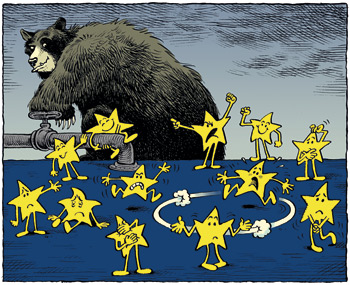
  (Click to enlarge image)


Though behind these arguments lies the main reason. Russia has always dominated the energy supply of the eastern European sector, and Ukraine knows this too well. Vladimir Putin has also imposed heavy custom checks on Ukrainian imports creating losses in the billions in theory. Embargoes from chocolate to steel pipes were also imposed upon goods this year and Mr Putin goes further on this, with forwardly stating that the Customs union as a whole may impose high levies in order to protect the Union for EU goods possibly entering their market.
The Payoff for Russia is vast. Not only does it secure a competitive advantage of trade with the Ukraine and cuts off basically its trade relations with the EU. It further tightens its power over the former soviet state and overall makes it ever so more dependent on Russia.
Vladimir Putin is also winning powerful game with the EU over its diplomatic procedure. That in all the EUs democratic ways are rather pointless in competitive arguments, as even if the Ukraine in someways would prefer to be courting itself with the EU commission, it still has to get into bed with Moscow. But this is by far not the first major hit by Russian Bear: slowly but surely it is geographically taking back its land.

It is amazing the unfortunate though inevitable power that strategic reason can have in undemocratic environments, but it is a good example of how maybe technocratic procedures could eliminate these problems for the EU, as it battles several fronts. Banking unity, Soverigen debt restructuring, migrational issues and strategic economics.

Tata for now
G.E.

Thursday, 1 August 2013

Central Banking 2014 Upgrades & Arab Uprising Part II

Good evening to all

The month of July has been rather amusing in market volatility and global economic indicators balancing out each other, mixed in with the typical political cocktail of civil unrest.


ECB and Bank of England Harmony

 With the markets losing some of the power and confidence in tactic decision making, today they looked to the words of Mark Carney (Bank of England) and Mario Draghi (ECB). The Outlook of both and interest rate decision remained unchanged, though new weapons such as market guidance are becoming more weighted on market volatility.

A Central bank’s words are one the most secretly kept letters before an announcement, as these words are the recurring power mover of any market. Previously a central bank would never try to give their opinion on forward assumptions of market growth, though the new Bank of England governor changed the norm.  So these words are now a typical aspect for market makers to expect in the medium term.


Liberalisation of the ECB was also in discussion; the idea of releasing the minutes of the ECB, could be seen as a more accurate way of the market valuing the future. Though in the Gothic economist’s opinion this will only produce more wild fire, and take less value of the central bank’s overall decision.

Vertigo Markets

So with the last month being pinned to fallout part 2, of the financial crisis shows that the wounds slowly are healing, for now... The patient is still in intensive care.

The redbull juice of quantitative easing, unfortunately could be working. Grumbles for the Gothic economist, as his positive monetarist views against Keynesian borrowing malarkey as being the devils work could succeed, as the S&P climbed today. However... These growth patterns with an over capitalised market, may bring future worries, to the mix.

Today the US market saw growth patterns that had not been seen since 2011, amongst these positive movements, there has also been frailness at the midpoint, due to fears of reduced growth within in china and liquidity worries for domestic and medium sized businesses.


The Brent crude benchmark has been on rapid brinks of decline and ascension. The Chinese downturn in GDP forecast, and the US growth results have been players on this. Since July continuing into August has seen many Middle Eastern civil problems affect oil output, and with US sanctions on cutting Iranian oil exports have been also implemented this week. Hence this fall going into the winter season for the northern hemisphere could see prices above $112 a barrel.

Positives that can be seen are controlled inflation position within Europe and US, also boosted exports in some of the sovereignly constrained Euro zone countries.

Burn Baby Burn


The Middle East and North African political process is still far from maturing in stability. With Nigerian tensions, the Egyptian political problem and summer maintenance schedules, the fall could haunt the price yet.
Libya has been flooded with protests and shut down of its ports, leaving the OPEC state with no oil and in some cased more than 50% fall in refining, giving August and September contracts a rise.

The markets could possibly become more active in their discontent with the Arab uprising, as foreign direct investment thoughts to Africa becomes less desirable.

The biggest problem is that due to these cuts in production, you cannot stop oil extraction straight away, so all you can do is flare. The burning of fuel in some parts of Africa have forecast to total over $100m a month, and with Flaring already being a major issue within Northern Canada, more investment and maintenance is demanded within the Oil & natural gas sector.

This week saw oil spills in Thailand, Nigeria and evidence of manufacturing faults with an Exxon pipeline in Canada. Enough said on future prices and environmental damage.


Closing Black Words

The energy sector will continue to climb, as middle east tensions are predicted to continue , if  US continues to give out low unemployment data and growth support. Though this highly unlikely, and in the fall, markets will become more volatile, as the deadline for the US borrowing limit comes closer.

Buy while you still can...


Monday, 1 July 2013

Bad US timing in Africa as Resource war is in full swing

As Obama makes his first real appearance in Africa, has he come far too late? As the president touched down in South Africa, he was greeted with more welcoming protests than the warmth he may have encountered on his trip to the G8 summit in Northern Ireland.


Africa itself is the new Jewel in the eye of slowing down major economies in the northern Hemisphere and where strategic economics may now work with African ways of life, which was unheard of back in the 80s-90s. Holding vast realms of natural resources and economies egger to grow, China has been making the most progress out of all nations, though has also been finding out, that Africa is not always easily bought and tapped.

Late jump from the gate

The Current Obama administration did not make an appearance in its last term, and through this the US has been living off the success of the Clinton administration’s duty free policy on African goods and the Bush administration’s poverty donations, though there is still nothing yet from Obama.

As he was escorted through Cape town in his usual armed battalion, including the support of the South African’s catalogue of Gorilla proof Jeeps, the president had come at a time of when millions of the continent’s inhabitants prepared for the mourning of Nelson Mandela, as well the general view of that Barak Obama “Another US President”. This comes from the Geo political position most south Africans see Mr Obama lying in. From the Libya Crisis and toppling of the Gaddafi regime last year, the involvement of more US drone aircraft in Africa and the current interactions and geopolitical moving in Syria.

Contractual ease by China

China has been conducting much more investment, as it saw the emptiness of foreign competition implementing strategy on the continent. China is finding it easy business doing deals in Africa, as a pragmatic position is taken for politics. There are no political improvements linked to any investment deal which may include a more stable government as some nations saw with previous western deals, giving much better political face to china.

Also with weak colonial might at the moment, no one is in the position to lecture China on its resource and foreign investment policies at this current time. Also with the increase of inflation in China, it is only be a matter of time until manufacturing is transferred overseas to Africa in order to reduce production costs.

Though making deals with Zimbabwe and Sudan hasn’t helped other sides of Chinese interests and shows more importance to business relationships than China’s social responsibility.

DIY Africa
The main issues with Africa are usually down to a few big factors where one or more is active:
  • Political Corruption
  • Civil Unrest
  • Inadequate Infrastructure
The oil industry is probably the wisest of the high risks from African operations. Companies such as BP and Exxon Mobil have dealt with losing oil wells due to political tensions, such as in Somalia; workers being captured and ransomed off and the sabotage from local greed and jealousy, which is the most interesting one in my opinion.

In Nigeria a local communities jealousy over another that has a well contract from an oil firm, will usually result in pipes being cut, or well heads being set ablaze. The market for D grade black market oil is then created through tribal gangs stealing the unrefined liquid and in the meantime the environment being damaged. With Nigeria cultures you are taught not to share or help, so other communities do not work together. The only cooperative relationship that usually occurs is when cleaning companies pay gangs to destroy wells in order to get cleaning contracts.

Energy shortages are also a major issue. Known for its mass ownership of electric generators, Africa’s civil infrastructure is in desperate need of being created.

The Future


There are certain countries such as South Africa and Angola which provide a forward vision for the Continent, with maybe only one of the three issues being faced.

As the US ranks third as trading partner to the continent, it will be rather soon that more foreign direct investment moves swiftly in. This is also contributed to the the reduction in global market liquidity seen in the past weeks, on the basis of changing Central banking monetary policy (mostly from the US) and the predicted slowdown in emerging markets. Africa due to its minerals has not experienced a reduction in investment hunger so much and with still a very large gap in market capacity across the board of sectors from resource extraction to government development projects, whilst the northern boundary has the rope pulled tighter, the centre realms of the equator look promising, just how much for Africa and more so, how will the economic transition process effect Political engineering and efficiency? This issue brought up when Libya was still continuing in conflict.
 
Tata
G.E.

Wednesday, 15 May 2013

Die Hard Economics vs Bitcoin

Whilst changing to a connecting flight in Zurich, one overheard from the men’s wash basin that “John McLane from Vienna is asked to make his way and board his connecting flight to Miami”, the thoughts of mass panic and chaos swelled into the Gothic Economist’s mind. Gliding out of the bathroom, with the swing of a Black aluminium case and looking like the perfect 21st century terrorist with some electronic body dance moves thrown in. He thought to himself; where would John McLane be needed soon?

The word Bitcoin very few may of heard up until recently, when it’s price surged from 11$ in 2011 to over 200$ this year. The fundamental laws that govern this virtual currency are beautiful, from freedom, to the potential downfall spike of a financial market.

The Dark Past


No one knows who the creator or creators of this virtual copper really are… Though tales are told in the Far East; and it is said to have originated from a hacking liberal collective known as Satoshi Nakamoto. This possible origin inspires the use of Bitcoin as pure freedom, so in a way this would make sense for its origin. But trusting the algorithmic workings of a hacking community for  what is now by investors seen as a very real object in the currency market, for me does spark concerns. More so are these concerns set ablaze with the value of this virtual coin being at over the $100 apiece.


No Monetary Policy, No Problem


If you are loathing of central banks and the continuous tax avoidance cleansing has rattled you to the puzzlement. The trust of your wealth management intermediary is in question? Then look no further!
The currency, being digital is not guaranteed or controlled by anything up to the heavens other than the free market. Hence for tax avoiders and people looking to acquire new safe havens, Bitcoin could prove to be fruitful. The work which occurs within Bitcoin is supply increase. There is cap currently on the currency until 2050, but until then it is up to you to solve algorithmic puzzles in order to win a few of the coins, by downloading ‘Bit miner’

Taxation & Stealth

Her majesty’s government met with figures from taxation to the online intelligence service (GCHQ), in order to discuss the problems of the new coin.
The central problem which the UK government and many others become sour at, is the notion that Bitcoin is near completely untraceable in transaction origin, and is impossible for any governing body other than the demand & supply of the free market to control. These founding rules have made this meeting turn to the operation of most likely bending these two main principles and eventuallz when they are bent, or with the help of some other countries broken, then taxation will be most likely to occur.

Uses and Commodity problems


Currently the uses of the coin movements are speculative and most likely large untraceable transactions, though rapidly online shops and services that are beginning to accept it. The only current backaches are the fears of Bitcoin becoming a commodity currency. The limiting factors of algorithms prove a big issue in dealing with this.
The coin I believe is a great step into the new way the world now works as more transactions become electronic. The frustrations I believe will come as countries try to file away at these, and then Bitcoin may take a turn for the worse.


So as we see that governments try their best to cling onto the new ounces of digital power, how will they send John McLane in, even if he ends up on the wrong side? Possibly using the powers of Tron, he will visualise into an arcade game and with 8 Bit explosions and Tetris pack punches he will fight the new virtual blanket of crime. At least Sir Mervyn King can now breath easily, that these and the remaining issues of monetary policy are not his problem anymore...Please insert coin here^^


Tuesday, 26 February 2013

February Gothic Viewpoint

The far outcries of a weary Britain’s Triple – A downgrade, and the far reaching wails of a Banshee that stay echoing with a once dominant oil giant could be the marks of February 2013, which Economics nerds remember.


Apart from that the dear lust I have in returning to the desolate sector which I call short-term trading. Research and hunger for a weakened Sterling drives me into vast array that this is 2013 and yes people need to be proactive in objects other than chess, in order to survive the Darwinian rules of life.
Iran goes Keynesian
For me, yes I will remember it for these two things, plus Iran’s new adventurous plans for 20 new uranium rich reactors.
Iran’s strategy of its announcement on the new nuclear reactor plans, may pay off in the long term. The strong decisions that Iran will not back down, regardless of international pressure on its nuclear programme as a known Islamic radical state, could pave the wave for new balance of payments to enter the country. Looking at in terms of the size of Iran, one could easily assume that Iran will have a power production surplus in cheap electricity, which could be provided to an oil dependent power consuming gulf.
As much as its nuclear programme is seen as a major threat to Israel and other nations, it could bring forth a new frontier of gulf power. Iran could enrich nuclear weapons, but instead it is taking positive approach in order to combat economic sanction bestowed upon them.

Wireless momentum
At the moment there are two groups pushing forward for one next big thing in world electronic devices. The ability to charge battery powered devices wirelessly from the handheld mp3s and smartphones, to the 12V battery in your car. The ‘Wireless power consortium’ and ‘Power matters’ alliances are the two big groups pushing this forward and competing. A future billion € industry that will maybe see the combination is well with wireless signals in order to keep the spectrum of signals generic and together, as the invisible spectrum gets more and more stuck together.
Only Fools and horses – The Long view

Well apart from the horse meat scandal. Some other people have silver lined their pockets in an array of marvelous moves within the economy.
As the currency attacks become far greater on central banks, deemed by hedge & Pension fund managers as being the new innocent flesh to be cleaned from bones, a sudden eye takes a glimpse where does it go from here?
Well with dilution in the power of central banks, the multiplier effect of virtual power transfers over to the hedge funds at a smiling rate, as they know after the submission of Bank of England to the new round of QE, they will easily take bets on world recession part II.

The Gothic Viewpoint
The central bank may take an extreme monetarism approach to curb the economy as economic collapse may look inevitable, pressing the political side of the coin in to reduce tax receipts in the short-term, in order to reduce the downturn in a rise in central bank interest rates. The proposal seems more to create a wave of laughing amongst some readers. But think of Europe in particular, what options are left before part II is not prophecy anymore?
So the Banshee has not given up yet haunting the tickers at the world indices and another wave of gothic worthy financial depression I may get to rant about. But one thing is for certain, that humans do become innovative, and are able to find ways to adapt to constraints. Well that’s the nice way to put it… now to listen to Rome!
Tata
Gothic Economist

Wednesday, 21 November 2012

The tale of two Islands in Asia

We are a week into the glimpse of China's new management board, upon the stage for China, seven suits encased with red ties stood before the world.


Mr Xi Jinping is now leader of an >80m Chinese communist party with his six new team members at the helm also, however attending the congressional announcement was former president Jiang Zemin. He was there for one reason only, to reassure the world, that as much pressure china's political system is under to become democratic, it will not cease. Mr Jiang actually got more attention due to this, compared with the new president at the congressional announcement, as Mr Xi is seen to be more open in a rational sense to changes within the political system.


This would be honey to the ears of Japan, as it announces it largest trade deficit with China, and this is not due to organic economic slowdown, it is down to a bunch of islands that Japan purchased. This has now led to negative growth in nearly two quarters, ergo Japan will be declaring a recession. Though even with a slightly easier going president, that's not to say members of the old school are not present in the other six.

Going to Behavioural and Strategic impact. The US has taken a very notoriously cunning step and in some ways it will overall benefit China. The US shifted the fire-power of 40,000 troops to conduct exercises   in the area, in a mutual indication to China, that it would standby Japan to defend it's territory, as Japan and the US have a treaty on defence of each other.
However at the same time, the US will now be overtaking Japan as largest export partner to China. So throwing a few 40,000 troops in an area to keep Japan happy for a while, whilst you take over their trading position is quite a good deal.
But it is just not the US that are conducting strategic positioning  China is producing bilateral trade agreements with South Korea, so to anyone's guess, economic pressure is fully being exerted onto the sword of the samurai. In return Japan is attempting trade agreements with the EU and Australia, regardless it will loose out.
Though it's not all sunshine and butterflies for the red flowers.
China's investor arms are going into the emerging markets, as western traders start getting bullish with their Chinese weighted portfolios. They seek non domestic protection, and as much as China racks on more tax incentives and lifts investment barriers, non of this is being seen to make a world of good; only behavioural investment sense of desperation, just making traders increase their bet values against China.


So China is plotting the downfall or economic suicide of Japan with its sustainable deficit of +200% of GDP.
Though it could be worse... You could be Greece, having to deal with your politicians not agreeing with the death dealers aka IMF and the EU, which just entered negative growth also. http://www.ft.com/intl/cms/s/2/0a35504a-0615-11e1-a079-00144feabdc0.html#axzz2CnY7xTPX

Whilst you then have to watch energy companies pay fines, of larger sums that what your country so desperately needs.
http://www.ft.com/intl/cms/s/0/555fa13c-2f46-11e2-8e4b-00144feabdc0.html#axzz2CnY7xTPX

Positive economics combined with the church of monetarism and Hayek. It lacks so much irrational emotion in these scaring areas, its hard to believe this is how economies work the best!!
Tata for now... GE


Wednesday, 7 December 2011

What to do??

I had no idea what on earth to write about last week...There was too much to write about!! Instead I made a draft of my views last week which I did not finish.

So the world has turned into the rule of the bond market. If you want to know what happens, look at the rating agencies a few purpose done government leaks and the market speculation.

one day this week at 13.30 the rallying of stocks occurred on the DAX bringing it up by 3% percent within minutes. Though still peripheral pressure was implemented on Europe.

The worrying thing was that the Chinese Central Bank cut deposit rates for banks as the China markets closed negative, possibly showing a new landmine that could go off on the already fuel leaking world market.

Still I think one kind of cranky positive result that has come out this week so far is that the UK economy doesn't seem to be needing to fear the rating agencies for the time being only the Strike currently occurring which is seeing huge amounts of public Sector workers affect the growth of the UK economy.

Monday, 21 November 2011

Middle East, Democracy and Civil Unrest

If you had to think of a chess match of strategic economics, this would be it.

In chess you have to be as many steps ahead of the opponent as possible, so that the main outcome is to bait your challenger into thinking that he can see your next move. The same can be said in the real world and this could be the playing game with the middle east.

Democracy is one of the stages in the building-blocs to becoming a more advanced country, but the trick is to know when that should be done, otherwise your country could stall or even worse be at the mercy of strategic interplay whether it be economics or geo-politics.

What better way to give an excuse to allow for more foreign intervention than to allow the people in the country, to remove the autocratic government and then have the temporary elected government become corrupt. This is the case in Egypt, this week the military government took action against protesting on the main Cairo square. This resulted in deaths, showing the new Egypt as unstable, allowing for more international pressure to be put on the OPEC state.

Libya at the moment is in a good position, the current governing body seems to have a good strategy to the recovery of the country and implementing democracy in the short medium-term. Also there is an equal amount of cooperation happening in Libya between the government and public, as they give ease and criticism to the transition. Libya was also one of the most developed African countries, thus for the democracy transition, it was inevitably going to be easier. Nonetheless they still had a civil war occur and bombing with NATO (though I think this was in tern for economic aid transaction for the future).


Syria remains highly unstable and also could show a more dangerous side of strategic economics... Allow the country to internally remove itself, where the remaining controller still has a wielding power. This is cost effectiveness for any country which sees a strategic advantage whether be in implementing a new government  strategy or for fundamental resources such as geographic dominance or natural resources for the example. Also external countries have less a reason to enter Syria as it's resource return is low and the public are not that cooperative.

I will continue more tomorrow on this topic, though I just spotted an announcement on 'Moody's' rating agency, which has the French AAA credit rating under view. This is just primarily down to market speculation, as we all know whether it be fundamental behavioural theory or strategic economics, the market is always proactive, though never as rational as a monkey.
Tata

Thursday, 3 November 2011

When the IMF reaffirms in your mind, why it is the Last Resort...

This week really marked a major time within the History of the European Monetary Union, the first stages of Greece having no more power in it's own country.


After the markets being stressed over the future of the €zone and Italy, it seemed a deal had been sealed on the weekend and the markets were looking hopeful for Monday, that was until the Greek PM flew back to Athens and announced there would be a referendum vote given to the Greek people to ask if they still wanted to be part of the euro and EU. Obviously the markets went to the panic button and Italian bond yields rose to the roof (The higher the bond yield, the higher the cost for Italy to borrow).


The last time I read of such a immediate of loss of power, was in the Oil Crisis peak of the 70s when the UK had to borrow from The International Monetary Fund. The IMF is the lender of last resort by any country's eyes, and when a combined package with the ECB was made in the last weekend of October, Greece seemed to think it had time to hold a referendum. The heads of the IMF, Germany & France just turned round and refused to give Greece any extra money this week until Greece did the right thing. Now Greece will not be trusted for a very long time...


There is without a doubt in my mind that the Greek PM did the wrong thing, he could have nearly produced the default on Tuesday. It was that serious and also he wasted a huge amount of money within the market. Not only that but when you take into consideration that Greek bond holders lost >50% of their value on their assets negotiated between the ECB & main holders, you can see why Angela Merkel, Nicholas Sarkozy & Christine Lagarde may want to hire an assassination Squad to take down George Papandreou.


Today FT.com produced an interactive map of the possibilities of the Fallout of the EU if Greece were to default, it's interesting whichever way you take it.


http://www.ft.com/cms/s/0/0a35504a-0615-11e1-a079-00144feabdc0.html#axzz1cXJyG6ms


I don't want to be 'I told you so'...but the default is only becoming more likely, November 2011 will be something European Economic history. The EU will be quite likely, kicking Greece into the dessert by the end of the month to sacrifice the few for the many. Then stage two gets under way... Italy


I'll promise I'll lighten the mood with one of my silly graphs on the weekend^^ Maybe zombies could trigger the collapse of the Eurozone? Stay tuned!

Thursday, 6 October 2011

The Upside of Econ-Goth Blogging

For lesser part of a reason I have began to learn the new interesting side of Behaviour & Experimental economics. 


Why does this entitle me to a blog spot one might ask? 
Well I'm using my most lousy excuse as being a Goth.With the worldwide outlook continuing to resemble the mind of a paranoid priest from the rural area of Ireland coming into contact with Glee, there isn't much bleaker to be seen than that through the eyes of the typical dark mind of a Goth. Therefore we can take a much better macro overview than the average stressed out economist etc. as gloom is our natural area for optimism so we do not exaggerate the extent to the end of days.


So what qualifies me to waste yours and definitely my invaluable time?
Well I couldn't give a rats arse what you think as us economic students are based on mostly assumption. I'm assuming your time is less valuable, thus you chose to waste your diminishing supply on me. Ergo until your interest diminishes, I assume you will continue reading.


So you just learnt the Law of  Diminishing Marginal Utility.


What I will talk about?
Well even I don't know, as any narcissistic person will tell you, I do like hearing my own opinion on things and I do have a agar eye for new material on the subject so I believe it will be about:
1.Current and future areas
2.New "exciting" material!