Showing posts with label Bank of England. Show all posts

Monday, 9 March 2020

Macroeconomic Pathogens


As Andrew Bailey warms up to his new office as governor of the Bank of England, he has a weather pattern that doesn’t sit well. He must wield the hand of a strained monetary policy in an upcoming Brexit world, and look to his fellow BoE economists in the impact modelling of Covid-19 on the UK. He knows the effectiveness of his institution is being tested, and as the rain pours down on thread needle street, the Dow Jones Level - 1 circuit breaker is hit.

Level 1: A drop of 7% from the prior day's closing price of the S&P 500 triggers a 15-minute trading halt. Trading is not halted if the drop occurs at or after 3:25 p.m. ET.
Level 2: A drop of 13% triggers a 15-minute halt. Trading is not halted if the drop occurs at or after 3:25 p.m. ET.
Level 3: A drop of 20% triggers a halt for the rest of the trading day, and trading resumes the following day.

Viruses and the economy

A pandemic is an interesting economic scenario, because it really has an open rule book to how it behaves, depending on the origin. It typically hits supply first, instead of demand. No matter how high the want for Parmesan cheese may be. A closed factory with a quarantined workforce in Italy will not meet the consumer demand. Take this with the additional pressure from panic buying, and we have an inverse relationship occurring.

In December, in a small district in the city of Wuhan, China. A local food market formulated, under the correct conditions Covid-19 that became the kick-starter to the correction of the world economy and largest global pathogenic outbreak in the industrialised world. Covid-19 has taken advantage of our interdependent infrastructure and supply chain. Bringing the economic might of China to a halt, and has now spread beyond borders and across the globe. Now with halted production, the dynamic borrowing small & medium enterprises in China depend on are becoming the first economic casualties.

Troubled water for the fishes

March was always going to be a difficult month. Fragile OPEC talks took place whereby leading oil producing states turned hostile in talks. Already having to deal with an economic slowdown from the virus, led to a terrible disagreement on supply cuts in order to combat the decline in oil receipts. This combined with negative data ensuing from the previous week, made markets on the 9th of March hit the circuit breakers on US indices.
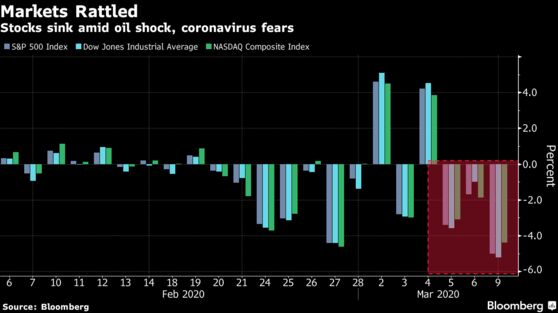

What further impact will be felt, is still early days, however these corrections will turn the portfolio manager to dive deeper into their folder and see which institutions and corporations are weak on the cash side and are “zombies” to this economic stagnation.

Airlines usually are the first ones with blood in the water and will be an interesting case with the crippled airline manufacturing issues from Boeing. However, they are hit in two ways. A reduction in sales, though also a reduction in fuel costs as now Jet fuel futures turn cheap. Yet, sales will take precedent, in combination to employee costs from the Covid-19 impact. March is the main month that fills the balance sheet and with the high ratios of the industry of net debt to Ebitda, the sharks will be circling for the bite.

Passing of the Baton to Fiscal

The last ten years has seen the largest global injection of cash into financial markets, with central banks fighting the faults of a stalling global economy. Yet, there are some human elements central bankers cannot solve, and where politicians will have no choice but to step up, as monetary policy shows its limit.

Government bonds took up the majority of the capital flight as US and European notes hit historic highs and as the fed made an emergency cut of 50 basis points, the central bankers of the world reaffirmed their position. Fiscal policy needs to step to the plate. 

Despite these warnings for many years, few economies are willing or able to act. The US congress passed a $8bn emergency corona virus response bill, to help struggling industries, though the euro-zone's export animal Germany needs to act fast, and reduce it's bickering on the purse string to the €1tn budget for the euro-zone. Despite having year-on-year fiscal surpluses Berlin has yet to relieve the several quarters of weak growth to fiscal policy. 

Closing remarks

After some further debating, OPEC will reach an agreement after their economies woo on sentiment. Yet, depending on the global fiscal response to small and medium sized industries, the a short lived bear could be an underestimation.

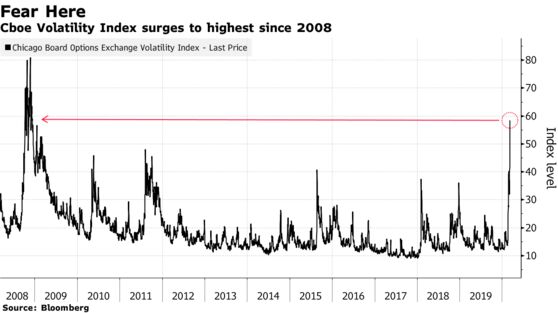
This brings me to my most beloved index. The VIX made it's comeback from the volatility and mania of 2008 on Monday, and acts as a careful reminder to governments and institutions, of the many weak spots the economy still has, if left unbalanced.



Tuesday, 1 September 2015

Super Summer, Super Thursday, Black Monday & End of Brazil's Commodity Cycle

Thursday the 6th of August signalled no change in Bank of England’s interest rate (Currently 0.5%), China’s central bank getting ready to move its weight in the direction of returning to devaluation, in order to boost exports, and from the other side of the Pacific, the looks of the US dollar strength year on year 20% bringing thoughts on the soon to be basis rate increase by the Federal Reserve.

S&P 500 Turmoil 
The major topics to be highlighted here are miscommunication and fundamental problems in the announcement of Central banks in the recent affairs of August.


Carney’s MPC

When double the information is released, as well as Mark Carney’s patented monetary trick of forward guidance, a market feels more reassured.

An 8-1 vote amongst the MPC committee, reaffirmed the near whole agreement of the current state of inflation targeting. Not only was the move concrete, it marked also the strength of the Canadian central banker’s hold at sailing the market through unknown hotspots arising.

The Forward guidance Mark Carney delivered was however the thought of many analysts; the UK economy is ‘in need in care’. The absolute truth and gut feeling for the majority, after an interesting summer change in growth levels, they know things could soon spike like a thunderbolt from the heavens, right down to the ground.

Reasons?

Most greatly mentioned is falling commodity prices, leading to lower inflation, also the continuing unknown course within the Euro-zone area, Russia and the slowdown in growth within the Far East and emerging economies. Hopefully due to this Carney could hopefully see the weighing scales to dip on either of the following two.
  •  Most consumers will decide to save, increasing MPS,
  • Consumers will be driven to consume more, due to the fall in production, fall in commodity prices, the price of goods will become less, keeping inflation positive.
As much as the second will help GDP, the first is more of a key issue, when it comes to either stagnation or end of the growth cycle.

Far East Volatility

Last week has been quite the roller coaster ride as Asian Stocks bore a significant plunge in value on Monday, then making a deep recovery by Thursday; Is this the end of Chinese volatility?

Vix Volatility Index S&P 500 

At the beginning of August, The Peoples Bank of China conducted devaluation of their international yuan currency, in order to help boost exports to deal with the crash in the Chinese markets. Though the delivery of the information was poor. The sudden unexpected change in the exchange rate policy, led to market turmoil that only calmed after clarification by the PBOC.

“China will maintain economic operations within a reasonable range”

The initial feel by the markets led to a global selloff of risky assets, as they believed it was a reaction to the abrupt deterioration in Chinese growth.
In the following days, China clarified the message by ensuring that the move they had made in devaluation was designed to

“Enhance market-orientation and benchmark status”.

The acknowledgement of poor communication had the effect of calming the markets, as the above statement gave light to moves the PBOC had made. First their purchasing of currency, the knowledge of $3.6Tr USD being in reserve, as well as US federal reserve rate hikes being on the  horizon soon enough. Domestically also the Renminbi’s real exchange rate has appreciated >25% since 2007.

Forecast

The gut feeling of analysts and my own personal assumptions, are that we can expect a steady slowdown in Chinese growth. This of course, leading to weaker demand in commodities, thereby having a knock-on effect on the Australian economy. At the end meaning, that portfolio diversification is crucial and that we should expect more surprises from China, as they grapple to deal with a crucial situation with their economy.


Economic Forecast: The Weather in Rio is looking bleak

For the body of Christ that towers over Rio, the Brazilian government also sees the world looking down. The country faces the end of its commodity growth cycle; and if that was not enough huge corruption, declining consumer confidence and preparation towards the Olympic Games.

Due to the rise in supply of oil, slowdown in emerging market production levels, and weak capital markets, Brazil is facing a dire position. The major fall of the Petrobas scandal, in its corruption and rescue cost to the economy, has only contributed more to the slowdown in economic growth and widening of the Brazilian deficit.

The situation, began by Brazil revaluating its surplus targets that sparked a selloff of Brazilian assets. Soon enough it led to an announcement by Standard & Poors, warning of the investment status being downgraded.


Brazil is desperately trying to take control of its inflation. In the last seven meetings of Brazil’s central bank, there has been an increase in interest rates each time, which now stands at 14.25%. Coupled together with two consecutive quarters of declining GDP, South America’s largest economy is now in recession.

Thursday, 1 August 2013

Central Banking 2014 Upgrades & Arab Uprising Part II

Good evening to all

The month of July has been rather amusing in market volatility and global economic indicators balancing out each other, mixed in with the typical political cocktail of civil unrest.


ECB and Bank of England Harmony

 With the markets losing some of the power and confidence in tactic decision making, today they looked to the words of Mark Carney (Bank of England) and Mario Draghi (ECB). The Outlook of both and interest rate decision remained unchanged, though new weapons such as market guidance are becoming more weighted on market volatility.

A Central bank’s words are one the most secretly kept letters before an announcement, as these words are the recurring power mover of any market. Previously a central bank would never try to give their opinion on forward assumptions of market growth, though the new Bank of England governor changed the norm.  So these words are now a typical aspect for market makers to expect in the medium term.


Liberalisation of the ECB was also in discussion; the idea of releasing the minutes of the ECB, could be seen as a more accurate way of the market valuing the future. Though in the Gothic economist’s opinion this will only produce more wild fire, and take less value of the central bank’s overall decision.

Vertigo Markets

So with the last month being pinned to fallout part 2, of the financial crisis shows that the wounds slowly are healing, for now... The patient is still in intensive care.

The redbull juice of quantitative easing, unfortunately could be working. Grumbles for the Gothic economist, as his positive monetarist views against Keynesian borrowing malarkey as being the devils work could succeed, as the S&P climbed today. However... These growth patterns with an over capitalised market, may bring future worries, to the mix.

Today the US market saw growth patterns that had not been seen since 2011, amongst these positive movements, there has also been frailness at the midpoint, due to fears of reduced growth within in china and liquidity worries for domestic and medium sized businesses.


The Brent crude benchmark has been on rapid brinks of decline and ascension. The Chinese downturn in GDP forecast, and the US growth results have been players on this. Since July continuing into August has seen many Middle Eastern civil problems affect oil output, and with US sanctions on cutting Iranian oil exports have been also implemented this week. Hence this fall going into the winter season for the northern hemisphere could see prices above $112 a barrel.

Positives that can be seen are controlled inflation position within Europe and US, also boosted exports in some of the sovereignly constrained Euro zone countries.

Burn Baby Burn


The Middle East and North African political process is still far from maturing in stability. With Nigerian tensions, the Egyptian political problem and summer maintenance schedules, the fall could haunt the price yet.
Libya has been flooded with protests and shut down of its ports, leaving the OPEC state with no oil and in some cased more than 50% fall in refining, giving August and September contracts a rise.

The markets could possibly become more active in their discontent with the Arab uprising, as foreign direct investment thoughts to Africa becomes less desirable.

The biggest problem is that due to these cuts in production, you cannot stop oil extraction straight away, so all you can do is flare. The burning of fuel in some parts of Africa have forecast to total over $100m a month, and with Flaring already being a major issue within Northern Canada, more investment and maintenance is demanded within the Oil & natural gas sector.

This week saw oil spills in Thailand, Nigeria and evidence of manufacturing faults with an Exxon pipeline in Canada. Enough said on future prices and environmental damage.


Closing Black Words

The energy sector will continue to climb, as middle east tensions are predicted to continue , if  US continues to give out low unemployment data and growth support. Though this highly unlikely, and in the fall, markets will become more volatile, as the deadline for the US borrowing limit comes closer.

Buy while you still can...


Thursday, 21 March 2013

The Euro and Europe , Which will last?

A good day to all.
The debauchery of this week foretells the story of a possible burn up in the re-entering of the euro into uncharted waters. The UK government delvers its budget and Iraq is seen as the place not to do oil business. Also old news, we have new executive pope for the Vatican bank.


The Drop Ultimatum 

Cyprus has now joined the PIIGS (Porturagal, Ireland, Italy, Greece and Spain), to become the sixth country to need emergency funds to support its crumbling financial system. Germany is leaving the terms melt into Cyprus for time being as the emergency funds run low. German pins lay sealed against the collars of the ECB & IMF as no room is left for breathing.

The idea of a leaving of the Euro is more likely than maybe dear readers may imagine... Cyprus is in a few good corners for this to work. Firstly it is a small country and second Russia is a big backer in Cypriot infrastructure, though the last thing the oligarchs want is their back-door into the EU being lost. Still it seems that the church, being the largest landowner in Cyprus has agreed to help out the Cypriot government. At the same time Cyprus losing it's trading advantage from having the increased cost of currency exchange transactions will not be a pleasant move.

Cyprus wants to stay part of the euro, though the only current options at its disposal are to take a percentage of deposit holders reserves, which by far will fuel a bank run. Or try and lipo out any money that is in the economy. This evening from the democratic side of the government, mentioned the ability to raise at least funds from the nationalisation of the state pension scheme, though this is not reassurance to safety. Neither in the same interview conducted on Monday's BBC 'Newsnight' program that they are also looking at a Euro zone exit and going back to the Cyprus pound.

The stickier ends of Black Gold

Ten years after the invasion of Iraq by British and US forces, there have been many rumours that it was not for weapons of mass destruction but for the sweet blood of the world that everyone is desperate for. Well the truth of ten years on Iraq can possibly be one of the worst places to buy a lease to drill.
FT interactive map of Iraq Oil ten years on

Iraq has only seen production levels hit similar sums before the war. a few years ago oil firms were running to buy up leases, but with the low margins and excessive problems with payments by government, bad infrastructure and continuing unrest, many have chosen to pull out.

In the other view it has shown that iraq is unafraid of playing hardball over its resources and despite what many think. Iraq is incharge of its oil and many would rather face other countries beaucreacy than Iraq's.

The Endpoint

So time for the monthly forecast from Mr Gothic Economist...

http://youtu.be/-LSxpxjMQ9c?t=1m5s (a bit of music for the mood)

We may see the first ever exit of a country from the euro-zone. It could be a marvellous move, or spell continuing economic black areas for the euro. My guess is with the tiredness of Germany and it's direct position on Cyprus, the currency exit looks very possible.

Negative growth is forecast for the next two months of the year with a continuing rise in inflation and maybe an increase interest rates soon to combat this, regardless of what Mark Carney (New bank of England head) is known for. It would be a bold move; maybe bold enough to reduce the ongoing increase in the cost of living.

A continued increase in the cost of the barrel of oil. Barak Obama may have visited the middle east to cool tensions, but the only thing that is possible from that is stagnation as the best outcome.

And the new Argentinian pope will keep on watching & Playing from the Vatican Bank.

Good Evening!
http://www.youtube.com/watch?v=F0PLZzi2JJo

Tuesday, 26 February 2013

February Gothic Viewpoint

The far outcries of a weary Britain’s Triple – A downgrade, and the far reaching wails of a Banshee that stay echoing with a once dominant oil giant could be the marks of February 2013, which Economics nerds remember.


Apart from that the dear lust I have in returning to the desolate sector which I call short-term trading. Research and hunger for a weakened Sterling drives me into vast array that this is 2013 and yes people need to be proactive in objects other than chess, in order to survive the Darwinian rules of life.
Iran goes Keynesian
For me, yes I will remember it for these two things, plus Iran’s new adventurous plans for 20 new uranium rich reactors.
Iran’s strategy of its announcement on the new nuclear reactor plans, may pay off in the long term. The strong decisions that Iran will not back down, regardless of international pressure on its nuclear programme as a known Islamic radical state, could pave the wave for new balance of payments to enter the country. Looking at in terms of the size of Iran, one could easily assume that Iran will have a power production surplus in cheap electricity, which could be provided to an oil dependent power consuming gulf.
As much as its nuclear programme is seen as a major threat to Israel and other nations, it could bring forth a new frontier of gulf power. Iran could enrich nuclear weapons, but instead it is taking positive approach in order to combat economic sanction bestowed upon them.

Wireless momentum
At the moment there are two groups pushing forward for one next big thing in world electronic devices. The ability to charge battery powered devices wirelessly from the handheld mp3s and smartphones, to the 12V battery in your car. The ‘Wireless power consortium’ and ‘Power matters’ alliances are the two big groups pushing this forward and competing. A future billion € industry that will maybe see the combination is well with wireless signals in order to keep the spectrum of signals generic and together, as the invisible spectrum gets more and more stuck together.
Only Fools and horses – The Long view

Well apart from the horse meat scandal. Some other people have silver lined their pockets in an array of marvelous moves within the economy.
As the currency attacks become far greater on central banks, deemed by hedge & Pension fund managers as being the new innocent flesh to be cleaned from bones, a sudden eye takes a glimpse where does it go from here?
Well with dilution in the power of central banks, the multiplier effect of virtual power transfers over to the hedge funds at a smiling rate, as they know after the submission of Bank of England to the new round of QE, they will easily take bets on world recession part II.

The Gothic Viewpoint
The central bank may take an extreme monetarism approach to curb the economy as economic collapse may look inevitable, pressing the political side of the coin in to reduce tax receipts in the short-term, in order to reduce the downturn in a rise in central bank interest rates. The proposal seems more to create a wave of laughing amongst some readers. But think of Europe in particular, what options are left before part II is not prophecy anymore?
So the Banshee has not given up yet haunting the tickers at the world indices and another wave of gothic worthy financial depression I may get to rant about. But one thing is for certain, that humans do become innovative, and are able to find ways to adapt to constraints. Well that’s the nice way to put it… now to listen to Rome!
Tata
Gothic Economist