Showing posts with label Gothic. Show all posts

Tuesday, 1 September 2015

Super Summer, Super Thursday, Black Monday & End of Brazil's Commodity Cycle

Thursday the 6th of August signalled no change in Bank of England’s interest rate (Currently 0.5%), China’s central bank getting ready to move its weight in the direction of returning to devaluation, in order to boost exports, and from the other side of the Pacific, the looks of the US dollar strength year on year 20% bringing thoughts on the soon to be basis rate increase by the Federal Reserve.

S&P 500 Turmoil 
The major topics to be highlighted here are miscommunication and fundamental problems in the announcement of Central banks in the recent affairs of August.


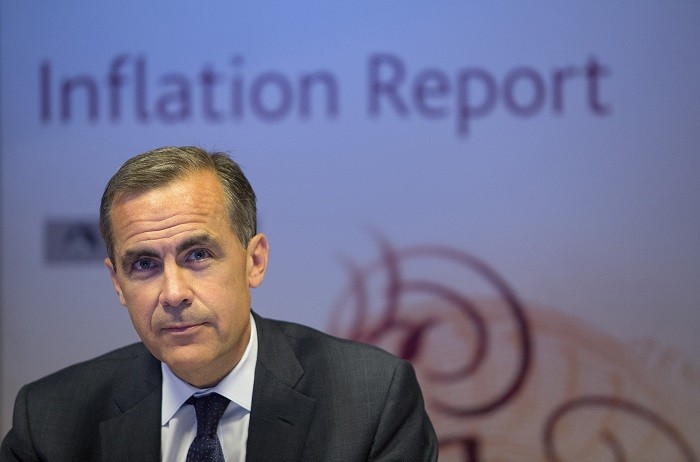
Carney’s MPC

When double the information is released, as well as Mark Carney’s patented monetary trick of forward guidance, a market feels more reassured.

An 8-1 vote amongst the MPC committee, reaffirmed the near whole agreement of the current state of inflation targeting. Not only was the move concrete, it marked also the strength of the Canadian central banker’s hold at sailing the market through unknown hotspots arising.

The Forward guidance Mark Carney delivered was however the thought of many analysts; the UK economy is ‘in need in care’. The absolute truth and gut feeling for the majority, after an interesting summer change in growth levels, they know things could soon spike like a thunderbolt from the heavens, right down to the ground.
Reasons?

Most greatly mentioned is falling commodity prices, leading to lower inflation, also the continuing unknown course within the Euro-zone area, Russia and the slowdown in growth within the Far East and emerging economies. Hopefully due to this Carney could hopefully see the weighing scales to dip on either of the following two.
  •  Most consumers will decide to save, increasing MPS,
  • Consumers will be driven to consume more, due to the fall in production, fall in commodity prices, the price of goods will become less, keeping inflation positive.
As much as the second will help GDP, the first is more of a key issue, when it comes to either stagnation or end of the growth cycle.

Far East Volatility

Last week has been quite the roller coaster ride as Asian Stocks bore a significant plunge in value on Monday, then making a deep recovery by Thursday; Is this the end of Chinese volatility?

Vix Volatility Index S&P 500 

At the beginning of August, The Peoples Bank of China conducted devaluation of their international yuan currency, in order to help boost exports to deal with the crash in the Chinese markets. Though the delivery of the information was poor. The sudden unexpected change in the exchange rate policy, led to market turmoil that only calmed after clarification by the PBOC.

“China will maintain economic operations within a reasonable range”

The initial feel by the markets led to a global selloff of risky assets, as they believed it was a reaction to the abrupt deterioration in Chinese growth.
In the following days, China clarified the message by ensuring that the move they had made in devaluation was designed to

“Enhance market-orientation and benchmark status”.

The acknowledgement of poor communication had the effect of calming the markets, as the above statement gave light to moves the PBOC had made. First their purchasing of currency, the knowledge of $3.6Tr USD being in reserve, as well as US federal reserve rate hikes being on the  horizon soon enough. Domestically also the Renminbi’s real exchange rate has appreciated >25% since 2007.

Forecast

The gut feeling of analysts and my own personal assumptions, are that we can expect a steady slowdown in Chinese growth. This of course, leading to weaker demand in commodities, thereby having a knock-on effect on the Australian economy. At the end meaning, that portfolio diversification is crucial and that we should expect more surprises from China, as they grapple to deal with a crucial situation with their economy.


Economic Forecast: The Weather in Rio is looking bleak

For the body of Christ that towers over Rio, the Brazilian government also sees the world looking down. The country faces the end of its commodity growth cycle; and if that was not enough huge corruption, declining consumer confidence and preparation towards the Olympic Games.

Due to the rise in supply of oil, slowdown in emerging market production levels, and weak capital markets, Brazil is facing a dire position. The major fall of the Petrobas scandal, in its corruption and rescue cost to the economy, has only contributed more to the slowdown in economic growth and widening of the Brazilian deficit.

The situation, began by Brazil revaluating its surplus targets that sparked a selloff of Brazilian assets. Soon enough it led to an announcement by Standard & Poors, warning of the investment status being downgraded.


Brazil is desperately trying to take control of its inflation. In the last seven meetings of Brazil’s central bank, there has been an increase in interest rates each time, which now stands at 14.25%. Coupled together with two consecutive quarters of declining GDP, South America’s largest economy is now in recession.

Wednesday, 27 August 2014

The Scottish Currency and Putin Economics

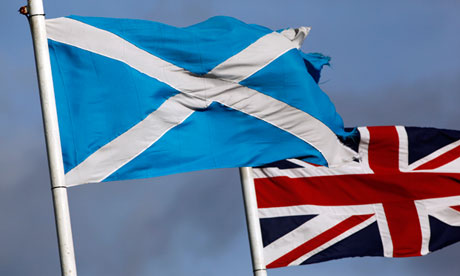
The week beginning was marked with Russia forcing aid into rebel held eastern Ukraine and the Second debate on Scottish independence from the United Kingdom.

Alex Salmond a bachelor of Economics and History, that went on to be leader of the Scottish National Party went against former Chancellor of the Exchequer Alistair Darling in a Televised debate on Monday night.

The debate, was a battle of words, with no answers for many on analysing and interpreting the outcome of Scotland's economy. The major being the currency. Alex Salmond fended off the question, though to many researchers and analysts the answer is a separate diluted currency. With this answer assumed as the most logical for an independent Scottish economy to function, let a alone work, the creation of a currency is inevitable.


The major issue en-laced within the UK government's need is that all UK debt is embedded in valuations of assets, such as assets in Scotland. This would in turn affect the borrowing capabilities and pricing for the remainder of the UK. Though the same would be for Scotland, the Scottish economy would have undertake its share of the debt produced from toxic assets incurred within the financial crisis. This in itself will cause capital flight to likely occur.


How to get the debt from Scotland is more of a major issue that the UK has to figure out, and will markets react to an unsound Scottish balance of payments book? With the quick decision making of the financial markets, and how to justify the information, the risk is acute.


Russia's economy is set for a strong downturn with the economic sanctions taking a deep toll on the balance of payments. Vladimir's game strategy back in march, was very successful as the economic sanctions over Russian influence on Crimea would have lifted and Russian territory would have expanded. It was a great strategic move as the markets saw their financial power see no change in the political strategy of the Kremlin. Though we are nearing September, and long term sanctions are not favourable. Even for a low rouble.


Though with low economic growth for Russia, will it be likely that Putin, takes a more aggressive stance in the Ukraine Crisis? After heightening the tensions with Kiev after sending a large convoy of "Aid" supplies into the rebel stronghold, Russian provocation of the west is becoming less forward strategy.Though a lot of moves made by the Russian premier in March were new out of the rule book.

Looking at the soft and hard currency position. Many companies from and working within Russia,are finding it next to impossible for day to day transactions to be conducted in the Russian Rouble. The oil and gas sector is heavily dependant on outside technology and skills, a major area the economic sanctions are effecting. Companies such as BP who own a major majority of Rosneft(Russian national oil company), are left being unable to transfer income to the UK subsidiaries or supply their projects.

From an investing point of view for game strategy, the likelihood of an escalation occurring even more is inapt. Conciliation of Russia and Ukraine, in order for the easing of economic sanctions is greater probability. However with multiple fields of major medical, civil and political unrest around the continental plate, there is greater chance of the less probable decision occurring, as with widespread risk, there is a greater prospect to get away with more.

Stormy seas ahead G.E.


Thursday, 21 November 2013

A Russian Trade Union, a love story with Ukraine


An interesting new political strategy is happening in Eastern Europe and on the north Asian plateau and it all smells too much like strategic economics again. Russia is moving its economic weight, but this time for a new strategic move of geographic proportion, an expansion into the realm of the trade/Customs union.
The EU is not only a unity of policies, with endless bilateral agreements and an entanglement of laws. Its main function at the end, is primarily to liberalise the movement of free trade within the European countries, which we closely now refer to as member states.
The reason to join a customs/trade union are simple, export growth that can lead a much better balanced current account for a country. Germany currently being the most prosperous, and even more so since the European Monetary Union was introduced, has led the way in showing how free trade is a great source for GDP.
Russia is currently focusing on expanding its customs union to the former USSR satellite states and then maybe further onto the Eurasian plate. It wants to take advantage of its natural resource position and the export dependency a lot of the former satellite states still have on it.
Ukraine was poised and ready to become a member state of the European Union, though it all smells now like a large bluff.  At the end of it all, it comes down to your largest trading partner. Ukraine does its trade with Russia a significant amount more than with the EU. Having then a bilateral agreement between the two, would significantly reduce export/import costs. Also most Ukrainians feel more Russian than European in culture, one thing resented by many of the eastern bloc is the European unity and fear of culture loss.


  (Click to enlarge image)


Though behind these arguments lies the main reason. Russia has always dominated the energy supply of the eastern European sector, and Ukraine knows this too well. Vladimir Putin has also imposed heavy custom checks on Ukrainian imports creating losses in the billions in theory. Embargoes from chocolate to steel pipes were also imposed upon goods this year and Mr Putin goes further on this, with forwardly stating that the Customs union as a whole may impose high levies in order to protect the Union for EU goods possibly entering their market.
The Payoff for Russia is vast. Not only does it secure a competitive advantage of trade with the Ukraine and cuts off basically its trade relations with the EU. It further tightens its power over the former soviet state and overall makes it ever so more dependent on Russia.
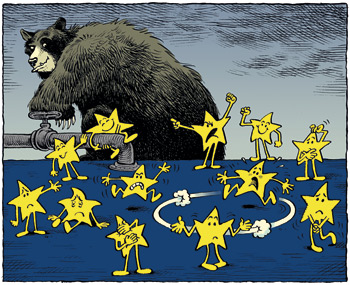
Vladimir Putin is also winning powerful game with the EU over its diplomatic procedure. That in all the EUs democratic ways are rather pointless in competitive arguments, as even if the Ukraine in someways would prefer to be courting itself with the EU commission, it still has to get into bed with Moscow. But this is by far not the first major hit by Russian Bear: slowly but surely it is geographically taking back its land.

It is amazing the unfortunate though inevitable power that strategic reason can have in undemocratic environments, but it is a good example of how maybe technocratic procedures could eliminate these problems for the EU, as it battles several fronts. Banking unity, Soverigen debt restructuring, migrational issues and strategic economics.

Tata for now
G.E.

Monday, 1 July 2013

Bad US timing in Africa as Resource war is in full swing

As Obama makes his first real appearance in Africa, has he come far too late? As the president touched down in South Africa, he was greeted with more welcoming protests than the warmth he may have encountered on his trip to the G8 summit in Northern Ireland.


Africa itself is the new Jewel in the eye of slowing down major economies in the northern Hemisphere and where strategic economics may now work with African ways of life, which was unheard of back in the 80s-90s. Holding vast realms of natural resources and economies egger to grow, China has been making the most progress out of all nations, though has also been finding out, that Africa is not always easily bought and tapped.

Late jump from the gate

The Current Obama administration did not make an appearance in its last term, and through this the US has been living off the success of the Clinton administration’s duty free policy on African goods and the Bush administration’s poverty donations, though there is still nothing yet from Obama.

As he was escorted through Cape town in his usual armed battalion, including the support of the South African’s catalogue of Gorilla proof Jeeps, the president had come at a time of when millions of the continent’s inhabitants prepared for the mourning of Nelson Mandela, as well the general view of that Barak Obama “Another US President”. This comes from the Geo political position most south Africans see Mr Obama lying in. From the Libya Crisis and toppling of the Gaddafi regime last year, the involvement of more US drone aircraft in Africa and the current interactions and geopolitical moving in Syria.

Contractual ease by China

China has been conducting much more investment, as it saw the emptiness of foreign competition implementing strategy on the continent. China is finding it easy business doing deals in Africa, as a pragmatic position is taken for politics. There are no political improvements linked to any investment deal which may include a more stable government as some nations saw with previous western deals, giving much better political face to china.

Also with weak colonial might at the moment, no one is in the position to lecture China on its resource and foreign investment policies at this current time. Also with the increase of inflation in China, it is only be a matter of time until manufacturing is transferred overseas to Africa in order to reduce production costs.

Though making deals with Zimbabwe and Sudan hasn’t helped other sides of Chinese interests and shows more importance to business relationships than China’s social responsibility.

DIY Africa
The main issues with Africa are usually down to a few big factors where one or more is active:
  • Political Corruption
  • Civil Unrest
  • Inadequate Infrastructure
The oil industry is probably the wisest of the high risks from African operations. Companies such as BP and Exxon Mobil have dealt with losing oil wells due to political tensions, such as in Somalia; workers being captured and ransomed off and the sabotage from local greed and jealousy, which is the most interesting one in my opinion.

In Nigeria a local communities jealousy over another that has a well contract from an oil firm, will usually result in pipes being cut, or well heads being set ablaze. The market for D grade black market oil is then created through tribal gangs stealing the unrefined liquid and in the meantime the environment being damaged. With Nigeria cultures you are taught not to share or help, so other communities do not work together. The only cooperative relationship that usually occurs is when cleaning companies pay gangs to destroy wells in order to get cleaning contracts.

Energy shortages are also a major issue. Known for its mass ownership of electric generators, Africa’s civil infrastructure is in desperate need of being created.

The Future


There are certain countries such as South Africa and Angola which provide a forward vision for the Continent, with maybe only one of the three issues being faced.

As the US ranks third as trading partner to the continent, it will be rather soon that more foreign direct investment moves swiftly in. This is also contributed to the the reduction in global market liquidity seen in the past weeks, on the basis of changing Central banking monetary policy (mostly from the US) and the predicted slowdown in emerging markets. Africa due to its minerals has not experienced a reduction in investment hunger so much and with still a very large gap in market capacity across the board of sectors from resource extraction to government development projects, whilst the northern boundary has the rope pulled tighter, the centre realms of the equator look promising, just how much for Africa and more so, how will the economic transition process effect Political engineering and efficiency? This issue brought up when Libya was still continuing in conflict.
 
Tata
G.E.

Wednesday, 15 May 2013

Die Hard Economics vs Bitcoin

Whilst changing to a connecting flight in Zurich, one overheard from the men’s wash basin that “John McLane from Vienna is asked to make his way and board his connecting flight to Miami”, the thoughts of mass panic and chaos swelled into the Gothic Economist’s mind. Gliding out of the bathroom, with the swing of a Black aluminium case and looking like the perfect 21st century terrorist with some electronic body dance moves thrown in. He thought to himself; where would John McLane be needed soon?

The word Bitcoin very few may of heard up until recently, when it’s price surged from 11$ in 2011 to over 200$ this year. The fundamental laws that govern this virtual currency are beautiful, from freedom, to the potential downfall spike of a financial market.

The Dark Past


No one knows who the creator or creators of this virtual copper really are… Though tales are told in the Far East; and it is said to have originated from a hacking liberal collective known as Satoshi Nakamoto. This possible origin inspires the use of Bitcoin as pure freedom, so in a way this would make sense for its origin. But trusting the algorithmic workings of a hacking community for  what is now by investors seen as a very real object in the currency market, for me does spark concerns. More so are these concerns set ablaze with the value of this virtual coin being at over the $100 apiece.


No Monetary Policy, No Problem


If you are loathing of central banks and the continuous tax avoidance cleansing has rattled you to the puzzlement. The trust of your wealth management intermediary is in question? Then look no further!
The currency, being digital is not guaranteed or controlled by anything up to the heavens other than the free market. Hence for tax avoiders and people looking to acquire new safe havens, Bitcoin could prove to be fruitful. The work which occurs within Bitcoin is supply increase. There is cap currently on the currency until 2050, but until then it is up to you to solve algorithmic puzzles in order to win a few of the coins, by downloading ‘Bit miner’

Taxation & Stealth

Her majesty’s government met with figures from taxation to the online intelligence service (GCHQ), in order to discuss the problems of the new coin.
The central problem which the UK government and many others become sour at, is the notion that Bitcoin is near completely untraceable in transaction origin, and is impossible for any governing body other than the demand & supply of the free market to control. These founding rules have made this meeting turn to the operation of most likely bending these two main principles and eventuallz when they are bent, or with the help of some other countries broken, then taxation will be most likely to occur.

Uses and Commodity problems


Currently the uses of the coin movements are speculative and most likely large untraceable transactions, though rapidly online shops and services that are beginning to accept it. The only current backaches are the fears of Bitcoin becoming a commodity currency. The limiting factors of algorithms prove a big issue in dealing with this.
The coin I believe is a great step into the new way the world now works as more transactions become electronic. The frustrations I believe will come as countries try to file away at these, and then Bitcoin may take a turn for the worse.


So as we see that governments try their best to cling onto the new ounces of digital power, how will they send John McLane in, even if he ends up on the wrong side? Possibly using the powers of Tron, he will visualise into an arcade game and with 8 Bit explosions and Tetris pack punches he will fight the new virtual blanket of crime. At least Sir Mervyn King can now breath easily, that these and the remaining issues of monetary policy are not his problem anymore...Please insert coin here^^


Thursday, 21 March 2013

The Euro and Europe , Which will last?

A good day to all.
The debauchery of this week foretells the story of a possible burn up in the re-entering of the euro into uncharted waters. The UK government delvers its budget and Iraq is seen as the place not to do oil business. Also old news, we have new executive pope for the Vatican bank.


The Drop Ultimatum 

Cyprus has now joined the PIIGS (Porturagal, Ireland, Italy, Greece and Spain), to become the sixth country to need emergency funds to support its crumbling financial system. Germany is leaving the terms melt into Cyprus for time being as the emergency funds run low. German pins lay sealed against the collars of the ECB & IMF as no room is left for breathing.

The idea of a leaving of the Euro is more likely than maybe dear readers may imagine... Cyprus is in a few good corners for this to work. Firstly it is a small country and second Russia is a big backer in Cypriot infrastructure, though the last thing the oligarchs want is their back-door into the EU being lost. Still it seems that the church, being the largest landowner in Cyprus has agreed to help out the Cypriot government. At the same time Cyprus losing it's trading advantage from having the increased cost of currency exchange transactions will not be a pleasant move.

Cyprus wants to stay part of the euro, though the only current options at its disposal are to take a percentage of deposit holders reserves, which by far will fuel a bank run. Or try and lipo out any money that is in the economy. This evening from the democratic side of the government, mentioned the ability to raise at least funds from the nationalisation of the state pension scheme, though this is not reassurance to safety. Neither in the same interview conducted on Monday's BBC 'Newsnight' program that they are also looking at a Euro zone exit and going back to the Cyprus pound.

The stickier ends of Black Gold

Ten years after the invasion of Iraq by British and US forces, there have been many rumours that it was not for weapons of mass destruction but for the sweet blood of the world that everyone is desperate for. Well the truth of ten years on Iraq can possibly be one of the worst places to buy a lease to drill.
FT interactive map of Iraq Oil ten years on

Iraq has only seen production levels hit similar sums before the war. a few years ago oil firms were running to buy up leases, but with the low margins and excessive problems with payments by government, bad infrastructure and continuing unrest, many have chosen to pull out.

In the other view it has shown that iraq is unafraid of playing hardball over its resources and despite what many think. Iraq is incharge of its oil and many would rather face other countries beaucreacy than Iraq's.

The Endpoint

So time for the monthly forecast from Mr Gothic Economist...

http://youtu.be/-LSxpxjMQ9c?t=1m5s (a bit of music for the mood)

We may see the first ever exit of a country from the euro-zone. It could be a marvellous move, or spell continuing economic black areas for the euro. My guess is with the tiredness of Germany and it's direct position on Cyprus, the currency exit looks very possible.

Negative growth is forecast for the next two months of the year with a continuing rise in inflation and maybe an increase interest rates soon to combat this, regardless of what Mark Carney (New bank of England head) is known for. It would be a bold move; maybe bold enough to reduce the ongoing increase in the cost of living.

A continued increase in the cost of the barrel of oil. Barak Obama may have visited the middle east to cool tensions, but the only thing that is possible from that is stagnation as the best outcome.

And the new Argentinian pope will keep on watching & Playing from the Vatican Bank.

Good Evening!
http://www.youtube.com/watch?v=F0PLZzi2JJo