Showing posts with label economy. Show all posts

Wednesday, 27 August 2014

The Scottish Currency and Putin Economics

The week beginning was marked with Russia forcing aid into rebel held eastern Ukraine and the Second debate on Scottish independence from the United Kingdom.

Alex Salmond a bachelor of Economics and History, that went on to be leader of the Scottish National Party went against former Chancellor of the Exchequer Alistair Darling in a Televised debate on Monday night.

The debate, was a battle of words, with no answers for many on analysing and interpreting the outcome of Scotland's economy. The major being the currency. Alex Salmond fended off the question, though to many researchers and analysts the answer is a separate diluted currency. With this answer assumed as the most logical for an independent Scottish economy to function, let a alone work, the creation of a currency is inevitable.
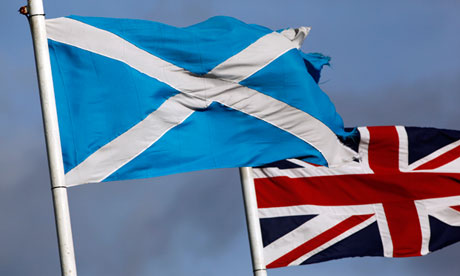


The major issue en-laced within the UK government's need is that all UK debt is embedded in valuations of assets, such as assets in Scotland. This would in turn affect the borrowing capabilities and pricing for the remainder of the UK. Though the same would be for Scotland, the Scottish economy would have undertake its share of the debt produced from toxic assets incurred within the financial crisis. This in itself will cause capital flight to likely occur.


How to get the debt from Scotland is more of a major issue that the UK has to figure out, and will markets react to an unsound Scottish balance of payments book? With the quick decision making of the financial markets, and how to justify the information, the risk is acute.


Russia's economy is set for a strong downturn with the economic sanctions taking a deep toll on the balance of payments. Vladimir's game strategy back in march, was very successful as the economic sanctions over Russian influence on Crimea would have lifted and Russian territory would have expanded. It was a great strategic move as the markets saw their financial power see no change in the political strategy of the Kremlin. Though we are nearing September, and long term sanctions are not favourable. Even for a low rouble.


Though with low economic growth for Russia, will it be likely that Putin, takes a more aggressive stance in the Ukraine Crisis? After heightening the tensions with Kiev after sending a large convoy of "Aid" supplies into the rebel stronghold, Russian provocation of the west is becoming less forward strategy.Though a lot of moves made by the Russian premier in March were new out of the rule book.

Looking at the soft and hard currency position. Many companies from and working within Russia,are finding it next to impossible for day to day transactions to be conducted in the Russian Rouble. The oil and gas sector is heavily dependant on outside technology and skills, a major area the economic sanctions are effecting. Companies such as BP who own a major majority of Rosneft(Russian national oil company), are left being unable to transfer income to the UK subsidiaries or supply their projects.

From an investing point of view for game strategy, the likelihood of an escalation occurring even more is inapt. Conciliation of Russia and Ukraine, in order for the easing of economic sanctions is greater probability. However with multiple fields of major medical, civil and political unrest around the continental plate, there is greater chance of the less probable decision occurring, as with widespread risk, there is a greater prospect to get away with more.

Stormy seas ahead G.E.


Thursday, 9 May 2013

Wealth management stays strong, Shale keeps on fracking and France feels the heat...

Tax Privacy lies no more

The continuing transition of banking secrecy becoming more open, continued last week, as Luxembourg, the British territory of Bermuda and Chiefs of Uni Credit began a mixture of transitioning towards a mixture of openness towards taxation figures, and bank balances.

The Austrian chancellor though is going one step further. He has been given approval to negotiate with the US a tax centred upon foreign bank account holdings. More centered towards account holders in the US, it will most likely be a two part situation for EU member states also. Austria is also signing up with the US to a mutual administrative assistance in regards to tax matters.

The movement is a combination of pressures implemented from the EU and US. Allowing for tracking of financial intermediaries that can involved in a rouge transactions, to increasing the strain on beating tax avoidance. Obviously a growing concern for large investors, though that hasn't put them off too much...


Regardless of this big shake up, wealth management and private banking are still on the rise. The likes of Goldman Sachs and JP Morgan are preferring to have a stickier type of deposit holder, where reserves are less volatile than those entwined within their investment arms.

As all these changes for reform, glide out of the former Habsburg empire, from neighbouring italy Tax evasion scandels for Mr Belesconi as he loses his appeal for a zero four-year jail sentance, for his punishments for tax evasion. FT article

Black Clovers

Ireland has now been recognized for offshore exploits to a once ignored segment of the Eurasian plate. This will hopefully bring a few more receipts into the stagnant Irish economy, though still striving as the only euro-zone member, that is currently able to repay its debts to creditors and the ECB.

Whilst the ocean floor is being discovered off the west coast of Kerry, in the US, commercial competitive rates of liquefied natural gas have raised hopes for the department of Energy, as the mining of shale has unlocked vast amounts of the fuel source. So much that the US is on high prospects to be net exporter by 2020.

The new energy boom is acting as a boost to the US recovery, as will eventually be reflected within the future months whilst the Brent Crude price fluctuates  The oil price staying firm on still low growth forecasts, and possibly more so into the end of 2013, that the US's energy chat moves further away from coal and oil, in the hope to reduce CO2 emissions and increase its strategic dominance, by becoming less energy dependent.

French woes

Last Friday marked 25 years of the Franco-German relationship within the council of financial and economic affairs. Though a Francois Hollande has certainly realized he and his government may have really played with fire, in relation to their bullish comments amongst other EU nations over the previous weeks.

With taking advantage of trade woes with UK & China, and insulting government figures in Germany, it is only obvious for Mr Hollande to possibly expect a more uncooperative relationship, in regards to their views against the Germans and their strong Hayek position. As well he also needs to manage a healthy cabinet reshuffle.

Protectionism and National independence is becoming more an issue, and with the organisations, such as the WTO, being in a crisis, slowly taxes and tarrifs may comeback into being. Though it is more likely that free-trade-areas and economic zones will continue to exist, just with larger import/export costs.


Wednesday, 21 November 2012

The tale of two Islands in Asia

We are a week into the glimpse of China's new management board, upon the stage for China, seven suits encased with red ties stood before the world.


Mr Xi Jinping is now leader of an >80m Chinese communist party with his six new team members at the helm also, however attending the congressional announcement was former president Jiang Zemin. He was there for one reason only, to reassure the world, that as much pressure china's political system is under to become democratic, it will not cease. Mr Jiang actually got more attention due to this, compared with the new president at the congressional announcement, as Mr Xi is seen to be more open in a rational sense to changes within the political system.


This would be honey to the ears of Japan, as it announces it largest trade deficit with China, and this is not due to organic economic slowdown, it is down to a bunch of islands that Japan purchased. This has now led to negative growth in nearly two quarters, ergo Japan will be declaring a recession. Though even with a slightly easier going president, that's not to say members of the old school are not present in the other six.

Going to Behavioural and Strategic impact. The US has taken a very notoriously cunning step and in some ways it will overall benefit China. The US shifted the fire-power of 40,000 troops to conduct exercises   in the area, in a mutual indication to China, that it would standby Japan to defend it's territory, as Japan and the US have a treaty on defence of each other.
However at the same time, the US will now be overtaking Japan as largest export partner to China. So throwing a few 40,000 troops in an area to keep Japan happy for a while, whilst you take over their trading position is quite a good deal.
But it is just not the US that are conducting strategic positioning  China is producing bilateral trade agreements with South Korea, so to anyone's guess, economic pressure is fully being exerted onto the sword of the samurai. In return Japan is attempting trade agreements with the EU and Australia, regardless it will loose out.
Though it's not all sunshine and butterflies for the red flowers.
China's investor arms are going into the emerging markets, as western traders start getting bullish with their Chinese weighted portfolios. They seek non domestic protection, and as much as China racks on more tax incentives and lifts investment barriers, non of this is being seen to make a world of good; only behavioural investment sense of desperation, just making traders increase their bet values against China.


So China is plotting the downfall or economic suicide of Japan with its sustainable deficit of +200% of GDP.
Though it could be worse... You could be Greece, having to deal with your politicians not agreeing with the death dealers aka IMF and the EU, which just entered negative growth also. http://www.ft.com/intl/cms/s/2/0a35504a-0615-11e1-a079-00144feabdc0.html#axzz2CnY7xTPX

Whilst you then have to watch energy companies pay fines, of larger sums that what your country so desperately needs.
http://www.ft.com/intl/cms/s/0/555fa13c-2f46-11e2-8e4b-00144feabdc0.html#axzz2CnY7xTPX

Positive economics combined with the church of monetarism and Hayek. It lacks so much irrational emotion in these scaring areas, its hard to believe this is how economies work the best!!
Tata for now... GE


Monday, 21 November 2011

Middle East, Democracy and Civil Unrest

If you had to think of a chess match of strategic economics, this would be it.

In chess you have to be as many steps ahead of the opponent as possible, so that the main outcome is to bait your challenger into thinking that he can see your next move. The same can be said in the real world and this could be the playing game with the middle east.

Democracy is one of the stages in the building-blocs to becoming a more advanced country, but the trick is to know when that should be done, otherwise your country could stall or even worse be at the mercy of strategic interplay whether it be economics or geo-politics.

What better way to give an excuse to allow for more foreign intervention than to allow the people in the country, to remove the autocratic government and then have the temporary elected government become corrupt. This is the case in Egypt, this week the military government took action against protesting on the main Cairo square. This resulted in deaths, showing the new Egypt as unstable, allowing for more international pressure to be put on the OPEC state.

Libya at the moment is in a good position, the current governing body seems to have a good strategy to the recovery of the country and implementing democracy in the short medium-term. Also there is an equal amount of cooperation happening in Libya between the government and public, as they give ease and criticism to the transition. Libya was also one of the most developed African countries, thus for the democracy transition, it was inevitably going to be easier. Nonetheless they still had a civil war occur and bombing with NATO (though I think this was in tern for economic aid transaction for the future).


Syria remains highly unstable and also could show a more dangerous side of strategic economics... Allow the country to internally remove itself, where the remaining controller still has a wielding power. This is cost effectiveness for any country which sees a strategic advantage whether be in implementing a new government  strategy or for fundamental resources such as geographic dominance or natural resources for the example. Also external countries have less a reason to enter Syria as it's resource return is low and the public are not that cooperative.

I will continue more tomorrow on this topic, though I just spotted an announcement on 'Moody's' rating agency, which has the French AAA credit rating under view. This is just primarily down to market speculation, as we all know whether it be fundamental behavioural theory or strategic economics, the market is always proactive, though never as rational as a monkey.
Tata

Friday, 18 November 2011

2025...The period for nuclear & renewable energy

I'm taking a mini break from the EU as the Financial Times this week has been reporting on the nuclear debate going on around the world currently, after the Japanese earthquake produced our second largest nuclear energy industrial incident. Not only that I was also invited to attend an ecological economics speech yesterday where nuclear was condemned (as well as positive economics & monetarism which is really two my economic areas). So I thought about giving my opinion, mixed in with scientific facts.

We cannot smell it, feel it; though we breath it in, it tans our skin, it's in the food we eat; it is there and that is what radiation is, the invisible particles of life. It has been there all our lives, from the sun, the earth, from atomic testing to the medical industry, but why are we scared of it?

My main three points about why people are against anything with the elements, are nuclear waste and nuclear destruction, be it weapons or meltdown. Though I feel a lot of the science is left unspoken, and facts can be larger than words, so here I go at trying to balance out the atomic debate with some economics as well.

The Science
Background radiation is everywhere and the biggest contributor is Radon, which comes from decaying elements in rocks within the earth's crust. Radon is approx 50% of background radiation and gamma and beta from the same decaying in the ground is 14%. 12 % is internal, what this means is we are technically radioactive as we have carbon -14 inside us, not only that, but what we eat has C-14, radioactive potassium as well as other radioactive elements inside. The next is the Cosmic, that's 10% contributed by space.
So...we have approximately 86% of radiation today being non-man made.

Man Made Radiation
The biggest man-made contributor of radiation is the medical industry...12%.
Air travel contributes 0.4%, fallout 0.4% occupational 0.2% and nuclear waste <0.1 %. This is all by the way up to present day factual numbers, from the UN, NAEA.

The Dangers
I really hate going into this topic as it is very sensitive for me on both sides valuing any loss in life is worrying area for me, but sometimes it has to be shown.
There have been many more and troubling disasters outside nuclear energy, the nuclear medical industry and other areas are much more worrying, here are examples:
http://en.wikipedia.org/wiki/List_of_civilian_radiation_accidents
My point here is that medical contributes more to background radiation, though we don't scrutinise x-rays, cat scans or cancer treatment?
And the horrible summary is that I have seen what oil has done to some poorest areas of the planet pollution wise in real life. We don't want to see it, smell it, touch it though we are addicted, that is what oil is for modern society and how many people have died due to it?

The Economics
My main concern is Germany's promise to scrap nuclear reactors by 2020. The funny thing is, to make up for that loss in nuclear, you have to build more coal fire power stations, which actually give out more radiation than a nuclear power station as well as carbon dioxide which then in turn goes in global warming. They are creating more wind farms and other renewable sources, but the energy production of wind turbine is so small, compared to energy demanded, it is an unrealistic approach and is very expensive contributor to the rise also in energy companies increasing their bills, as well as the price of oil being more susceptible to shocks and increasing due to demand and supply.
People right now and in future years cannot afford this until technology in the renewable sector improves and governments can afford to run deficits.

Conclusion
My goal is not to say we should be Nuclear forever, but when you have depleting highly demanded natural resources. A society which is going through depleted income, that will eventually have to pay more continuously for energy. A time where new nations demand more energy, and geopolitics becomes more powerful... To look away from Nuclear is really a scary mistake I feel.

Renewable energy is the future beyond a doubt, within 5-10 years we most likely will have fusion near perfected for power generation testing, and wind energy being actually cheap in a competitive market. That is where the future lies, but to jump on the green band wagon completely does not make sense from an environmental and economic point of view.

Thursday, 3 November 2011

When the IMF reaffirms in your mind, why it is the Last Resort...

This week really marked a major time within the History of the European Monetary Union, the first stages of Greece having no more power in it's own country.


After the markets being stressed over the future of the €zone and Italy, it seemed a deal had been sealed on the weekend and the markets were looking hopeful for Monday, that was until the Greek PM flew back to Athens and announced there would be a referendum vote given to the Greek people to ask if they still wanted to be part of the euro and EU. Obviously the markets went to the panic button and Italian bond yields rose to the roof (The higher the bond yield, the higher the cost for Italy to borrow).


The last time I read of such a immediate of loss of power, was in the Oil Crisis peak of the 70s when the UK had to borrow from The International Monetary Fund. The IMF is the lender of last resort by any country's eyes, and when a combined package with the ECB was made in the last weekend of October, Greece seemed to think it had time to hold a referendum. The heads of the IMF, Germany & France just turned round and refused to give Greece any extra money this week until Greece did the right thing. Now Greece will not be trusted for a very long time...


There is without a doubt in my mind that the Greek PM did the wrong thing, he could have nearly produced the default on Tuesday. It was that serious and also he wasted a huge amount of money within the market. Not only that but when you take into consideration that Greek bond holders lost >50% of their value on their assets negotiated between the ECB & main holders, you can see why Angela Merkel, Nicholas Sarkozy & Christine Lagarde may want to hire an assassination Squad to take down George Papandreou.


Today FT.com produced an interactive map of the possibilities of the Fallout of the EU if Greece were to default, it's interesting whichever way you take it.


http://www.ft.com/cms/s/0/0a35504a-0615-11e1-a079-00144feabdc0.html#axzz1cXJyG6ms


I don't want to be 'I told you so'...but the default is only becoming more likely, November 2011 will be something European Economic history. The EU will be quite likely, kicking Greece into the dessert by the end of the month to sacrifice the few for the many. Then stage two gets under way... Italy


I'll promise I'll lighten the mood with one of my silly graphs on the weekend^^ Maybe zombies could trigger the collapse of the Eurozone? Stay tuned!