Showing posts with label European Union. Show all posts

Monday, 4 May 2020

Economic Strains from Covid 19


Liquid is Key

We are over two months into the crisis in Europe. One thing this has pointed out to me, that I remember when I finished school in Ireland in 2009, at the height of the euro-zone crisis. I looked at a brand new petrol station having the pumps taken away, and over the street next to it, a boarded up coffee shop. It doesn't matter the situation, cash is king! 


A financial crisis is like a heart attack. It hits the pump of the economy hard and the organs, as the blood stops pumping cannot support the body, as they do not have sufficient liquidity. The defibrillator is the central bank, which is the key to getting trust restored and applying the voltage funding to kick start the heart.

A depression on the other hand, is a much more difficult patient. Serious organ failure, complimented with underlying health conditions; a quadruple blowout. There is no clear solution to get this patient out of the coma. More important, is how the economy is sustained during coma and its slow recovery; as it is very easy for the large corporates to eat up their solvent but less liquid competitors.

There are right now, three tiers of balance sheet a business could be.
  1. Solid cash generation on hand, few illiquid assets i.e. tech companies.
  2. Easy access to capital markets, with a higher cost of financing due to the demand.
  3. Cannot access credit and capital impairment probability is high. SMEs and capital-intensive industry.
The final pillar will be the major part of the life support. The ECB and Fed injected over $3 trillion between themselves, with bond buying. However, this is a macro move. Governments have taken their turn in supporting their central banks, but must step in quickly, consistently and effectively, to support the small domestic economy. Caution should be exercised carefully in the aid to large industry, as it could be throwing Semtex at itself or rattling the sabre of next door neighbours. 

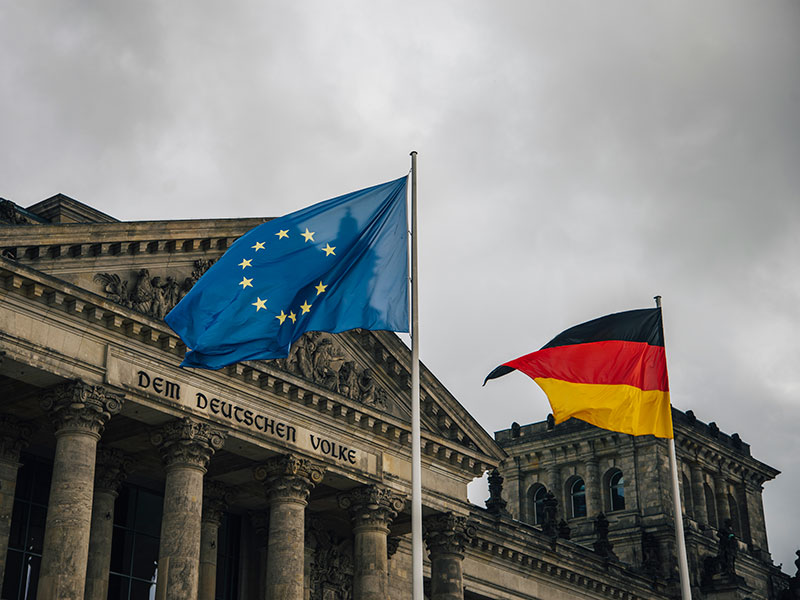
Germany is facing serious scrutiny of unfair advantage. As the EU relaxed its law on state aid due to Covid-19, the German ministry filed the largest proportion of state-aid claims to the EU, as it helps to prop up big industries, most notably the airline industry. Though, this has hit hard with less wealthy EU member states left to see their home industries put at a negative advantage.
Cheaper than Water

Being a producer of black gold in 2020 will be remembered as not the best time in the world, being the owner of an empty mine shaft on the other hand.... Oil traders have scoured the globe to find empty Scandinavian salt caves, to unused rail tankers to fill the glutted supply of unwanted crude.

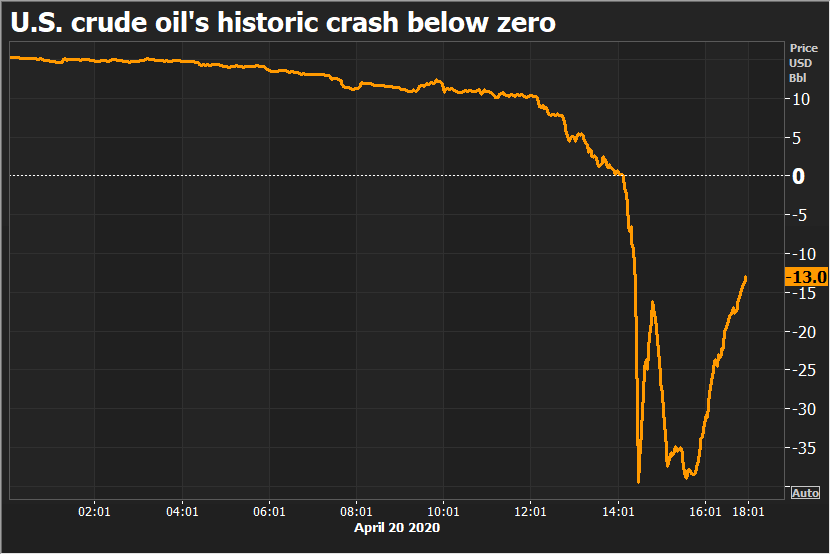
In late April, Brent fell below zero from the mid-seventies in value of long-ago January, for the first time in history, causing an interesting phenomenon of a contango. As the spot price fell below zero, future prices overtook in value. Traders had the unique ability to buy and sell back deliveries on the futures market at a reasonable profit complimenting an additional surge in storage demand.

Cheap oil has the incentive of attracting a quicker rebound to the global economy. However, this comes with its downside when too low. OPEC is seen sometimes as a group of spoilt children, fighting over the lion’s share of production. But it plays an important stabilisation role of its members economies. Rural communities in Nigeria are highly dependant on the sale of oil as a source of income, as are most mid-African and middle eastern nations. However, with values not expected to go up anytime soon to break-even levels, civil unrest will be highly probable, even with OPEC cuts.

It would not be a far stretch to think additionally the oil crash was not intentional. It is well versed the Russian-Saudi annoyance towards the young shale and fracking industry in the US, which commands a higher break-even price and is not state supported, thus leaving room to quickly shock the unprotected industry, before slowing the pumps.


Closing remarks with a Gothic upswing

There will be a lot more debt in society, and a stronger desire of companies to look at resilience before efficiency, as a global supply chain can only be efficient if effective.

The rewiring of supply chains away from the inter-dependence of global health will be a major step, already in process. The epidemic in some ways may have triggered an inevitability, as US-China trade tensions from 2019 linger on and the crumbling of the EU collective continues its course.

It would not be a far reaching thought to see a pre Great Depression scenario, whereby the cost of goods and services increases, as well as barriers to entry for international trade, through taxes and tariffs for the protection of home industry. This will deeply stimulate cost push and demand pull inflation. Though, with the technological overview to monitor the economy and global cooperative approaches in the 21st century, it could create a balancing in the distribution of wealth to domestic economies, to the lower income earners. This would occur, as new employment is created locally and low skilled labour is required, leading to social policies winning greater favour in local government institutions, perhaps in the mid-term to incentivise the demand for labour.


Thursday, 21 November 2013

A Russian Trade Union, a love story with Ukraine


An interesting new political strategy is happening in Eastern Europe and on the north Asian plateau and it all smells too much like strategic economics again. Russia is moving its economic weight, but this time for a new strategic move of geographic proportion, an expansion into the realm of the trade/Customs union.
The EU is not only a unity of policies, with endless bilateral agreements and an entanglement of laws. Its main function at the end, is primarily to liberalise the movement of free trade within the European countries, which we closely now refer to as member states.
The reason to join a customs/trade union are simple, export growth that can lead a much better balanced current account for a country. Germany currently being the most prosperous, and even more so since the European Monetary Union was introduced, has led the way in showing how free trade is a great source for GDP.
Russia is currently focusing on expanding its customs union to the former USSR satellite states and then maybe further onto the Eurasian plate. It wants to take advantage of its natural resource position and the export dependency a lot of the former satellite states still have on it.
Ukraine was poised and ready to become a member state of the European Union, though it all smells now like a large bluff.  At the end of it all, it comes down to your largest trading partner. Ukraine does its trade with Russia a significant amount more than with the EU. Having then a bilateral agreement between the two, would significantly reduce export/import costs. Also most Ukrainians feel more Russian than European in culture, one thing resented by many of the eastern bloc is the European unity and fear of culture loss.


  (Click to enlarge image)


Though behind these arguments lies the main reason. Russia has always dominated the energy supply of the eastern European sector, and Ukraine knows this too well. Vladimir Putin has also imposed heavy custom checks on Ukrainian imports creating losses in the billions in theory. Embargoes from chocolate to steel pipes were also imposed upon goods this year and Mr Putin goes further on this, with forwardly stating that the Customs union as a whole may impose high levies in order to protect the Union for EU goods possibly entering their market.
The Payoff for Russia is vast. Not only does it secure a competitive advantage of trade with the Ukraine and cuts off basically its trade relations with the EU. It further tightens its power over the former soviet state and overall makes it ever so more dependent on Russia.
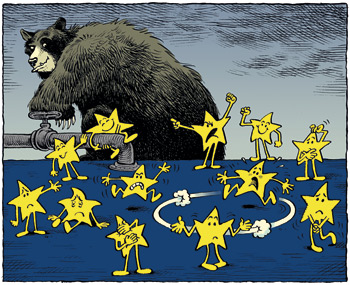
Vladimir Putin is also winning powerful game with the EU over its diplomatic procedure. That in all the EUs democratic ways are rather pointless in competitive arguments, as even if the Ukraine in someways would prefer to be courting itself with the EU commission, it still has to get into bed with Moscow. But this is by far not the first major hit by Russian Bear: slowly but surely it is geographically taking back its land.

It is amazing the unfortunate though inevitable power that strategic reason can have in undemocratic environments, but it is a good example of how maybe technocratic procedures could eliminate these problems for the EU, as it battles several fronts. Banking unity, Soverigen debt restructuring, migrational issues and strategic economics.

Tata for now
G.E.

Thursday, 21 March 2013

The Euro and Europe , Which will last?

A good day to all.
The debauchery of this week foretells the story of a possible burn up in the re-entering of the euro into uncharted waters. The UK government delvers its budget and Iraq is seen as the place not to do oil business. Also old news, we have new executive pope for the Vatican bank.


The Drop Ultimatum 

Cyprus has now joined the PIIGS (Porturagal, Ireland, Italy, Greece and Spain), to become the sixth country to need emergency funds to support its crumbling financial system. Germany is leaving the terms melt into Cyprus for time being as the emergency funds run low. German pins lay sealed against the collars of the ECB & IMF as no room is left for breathing.

The idea of a leaving of the Euro is more likely than maybe dear readers may imagine... Cyprus is in a few good corners for this to work. Firstly it is a small country and second Russia is a big backer in Cypriot infrastructure, though the last thing the oligarchs want is their back-door into the EU being lost. Still it seems that the church, being the largest landowner in Cyprus has agreed to help out the Cypriot government. At the same time Cyprus losing it's trading advantage from having the increased cost of currency exchange transactions will not be a pleasant move.

Cyprus wants to stay part of the euro, though the only current options at its disposal are to take a percentage of deposit holders reserves, which by far will fuel a bank run. Or try and lipo out any money that is in the economy. This evening from the democratic side of the government, mentioned the ability to raise at least funds from the nationalisation of the state pension scheme, though this is not reassurance to safety. Neither in the same interview conducted on Monday's BBC 'Newsnight' program that they are also looking at a Euro zone exit and going back to the Cyprus pound.

The stickier ends of Black Gold

Ten years after the invasion of Iraq by British and US forces, there have been many rumours that it was not for weapons of mass destruction but for the sweet blood of the world that everyone is desperate for. Well the truth of ten years on Iraq can possibly be one of the worst places to buy a lease to drill.
FT interactive map of Iraq Oil ten years on

Iraq has only seen production levels hit similar sums before the war. a few years ago oil firms were running to buy up leases, but with the low margins and excessive problems with payments by government, bad infrastructure and continuing unrest, many have chosen to pull out.

In the other view it has shown that iraq is unafraid of playing hardball over its resources and despite what many think. Iraq is incharge of its oil and many would rather face other countries beaucreacy than Iraq's.

The Endpoint

So time for the monthly forecast from Mr Gothic Economist...

http://youtu.be/-LSxpxjMQ9c?t=1m5s (a bit of music for the mood)

We may see the first ever exit of a country from the euro-zone. It could be a marvellous move, or spell continuing economic black areas for the euro. My guess is with the tiredness of Germany and it's direct position on Cyprus, the currency exit looks very possible.

Negative growth is forecast for the next two months of the year with a continuing rise in inflation and maybe an increase interest rates soon to combat this, regardless of what Mark Carney (New bank of England head) is known for. It would be a bold move; maybe bold enough to reduce the ongoing increase in the cost of living.

A continued increase in the cost of the barrel of oil. Barak Obama may have visited the middle east to cool tensions, but the only thing that is possible from that is stagnation as the best outcome.

And the new Argentinian pope will keep on watching & Playing from the Vatican Bank.

Good Evening!
http://www.youtube.com/watch?v=F0PLZzi2JJo

Friday, 25 January 2013

The beautiful Economy

Friday marked the UK seeing negative growth again, letting flow wonderful politics into a more aching country of why the economy does not work the way people want it to...


More onto bigger things in the world... Switzerland played host to the world economic forum, where the UK was on the firing line at trying to explain what their position for the future will hold with themselves and the very patient European Union. The UK is currently doing it's utmost to have special privileges given to itself in order that it can remain in the EU without having all the new sanctions put in place that every other member state will have implemented into their infrastructure. Though obviously this is very unlikely to happen, France took a firm root of describing the UK wanting an a la carte menu, where as Germany's foreign minister took a light cherry picking expression instead. Regardless of this the current UK ruling conservative party is leaving this to a referendum of 2017, but what companies in the UK do not need right now is uncertainty. Already financial institutions are seeking possible new bases in Frankfurt for new european operations as the 'City' now looks less of a stronghold for profitable conduction of business.

The US itself produced stress at the beginning of the year with it's comedy styling debt ceiling. The strain of the ceiling's pressure and stress on the markets could be eased if the policy was altered to allow the Federal reserve to borrow above the limit, whilst the US congress decides on which policy implementations to support it. I highly doubt that congress will let the US default on it's debts; it is as likely as me going to sleep in latex after a night out. Possible, but highly uncomfortable as much as I may not want to get out of it!

Onto the future... China and Japan seemed to have announced that they will attempt to build new relations with each other, though in the eye of beholder this will stay continue to remain a brewing cauldron.


Wednesday, 26 September 2012

The Arctic, Russia and the West

The Arctic, the final frontier and one of the most unexplored regions for oil; it has stayed very unexplored for a reason. Shell this week announced their suspension of their drilling, this included France's Total. Combined spending of these two companies within the region is estimated at approximately $7-9Bn. This has occurred due to countless safety problems and the high guarantee of not being able to contain a spill if occurred. ENI and Exxon Mobil though still have their hands hooked into the exploration of the Russian Arctic, but progress has yet to be made, or is it really Russia's Arctic?

Countless disputes between Norway and Russia over the northern territory have continued, leading more secondary companies to conduct their northern drilling explorations from Greenland, yet progress is still yet to be made, one of the suffers of $1Bn yet to make a comeback is Cairn Energy. Russia may though, as well as BP be drawing a quick line under their exploration problems, if the long battle zone of TNK-BP joint venture can be settled.Therefore rebidding of Rosneft (Russia's state oil company) can start again, bringing BP back into the Strategic oil club, and more importantly growing in size since it's asset sale to cover it's remaining Gulf of Mexico disaster repayments.

If the deal with Rosneft is completed soon, BP could quickly become the largest licensed drilling holder within the Arctic. The company is known to be at the front of hard drilling conditions, but also for their failure to operate safely. If BP through the help of Rosneft throws $12Bn give or take, with their newest Arctic technology, they could become successful in domineering the one fifth of the worlds, untapped oil resources.
The company is now finalising the selling of two refineries in the US, leaving it desperate to grow more. Taking a more primary/tertiary model of growth, will be beneficial for the company, though refining oil is turning into a more profitable area of the oil sector. Many new companies are entering this market such as Marathon Petroleum and buying refineries of the likes of BP.

If success is seen in Russia, the strategic energy chart will be weighed more heavily towards the old bears, as the unrest within North Africa and the Middle East continues. Though the slowdown in economic growth has, allowed for the demand price of oil to drop to lows of $108.00 bbl, showing that as much as oil production risk may have increased, the demand has dropped. Though I think it is safe to assume that OPEC will drop supply if it decreases "too much".

Another attack from Europe is occurring. Just before this winter the EU began a probe into GazProm (Russia's state gas company) for it's price fixing to Europe, but more on that in the next entry.
Tata GE


Wednesday, 13 June 2012

How to dismantle an atomic Eurozone, Putin Punches & Barrels of Black

After some weekend back pressure, Spain eventually retracted from their denial, they needed money.However... the speed in which it took, was like a bullet leaving a gun, when comparing it to the other euro-bailouts, which leaves our dear Gothic analyser in pondering. How long till the others start renegotiating their bailouts after Spain's easy cash injection?

The weakness of Europe couldn't be better portrayed this week as the value of currency continues to fall, as the markets speculate the eventual truth...The euro-zone will never be the same.

On Tuesday it was announced that the banks of Europe will now be interlinked into a european banking system infrastructure that could be complete by January next year, though that is to say that we will still be looking at the same Europe by then. The banking entwining is just an extra stepping stone in the pond towards the european fiscal union. But like so many european policies an extra stepping stone might just be delaying, the eventual splash and dampness of the ever so deep Stygian pond.

Taking a leap to Syria and we see the real site of Strategic economics and Geo-political heavyweights Russia, not leaving any breathing space and taking full advantage of gaining more political might in the middle east by the revealing of arms and now helicopter gunships support to Syria. This is nothing new for Russia to supply Syria even before the Arab spring uprising first began.
In a way it is an inevitability that Russia would do this, as it is in a current position of just turning into a fuel supplier if it were not to challenge itself to keeping the fight in its corner of the ring, plus with a troubled financial world it's the best time for Russia to do it's dirty deeds.

At the same time OPEC meets in Vienna to see what to do about the collusion oil breakers Saudi Arabia, that has continued to break its quota on oil production, though as markets predict economic slowdown. Mr Gothic economist can only say, that it could be in your interest to fill up your tank before the week is out, as Saudi Arabia will either reduce its supply; or the others will.

I had a befuddled moment of clarity, where I remember how god had created economists to make weather forecasts look good. In economics we can an only assume; and as a Gothic economist I can only assume the worst, Good day to all

P.S. Do not prithee peace, it shall not be soon!