Showing posts with label Ukraine. Show all posts

Wednesday, 27 August 2014

The Scottish Currency and Putin Economics

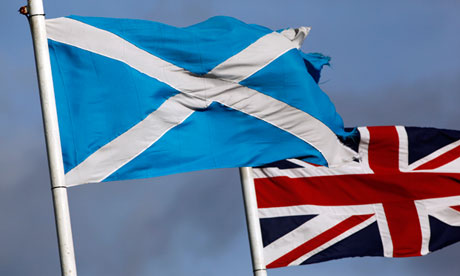
The week beginning was marked with Russia forcing aid into rebel held eastern Ukraine and the Second debate on Scottish independence from the United Kingdom.

Alex Salmond a bachelor of Economics and History, that went on to be leader of the Scottish National Party went against former Chancellor of the Exchequer Alistair Darling in a Televised debate on Monday night.

The debate, was a battle of words, with no answers for many on analysing and interpreting the outcome of Scotland's economy. The major being the currency. Alex Salmond fended off the question, though to many researchers and analysts the answer is a separate diluted currency. With this answer assumed as the most logical for an independent Scottish economy to function, let a alone work, the creation of a currency is inevitable.


The major issue en-laced within the UK government's need is that all UK debt is embedded in valuations of assets, such as assets in Scotland. This would in turn affect the borrowing capabilities and pricing for the remainder of the UK. Though the same would be for Scotland, the Scottish economy would have undertake its share of the debt produced from toxic assets incurred within the financial crisis. This in itself will cause capital flight to likely occur.


How to get the debt from Scotland is more of a major issue that the UK has to figure out, and will markets react to an unsound Scottish balance of payments book? With the quick decision making of the financial markets, and how to justify the information, the risk is acute.


Russia's economy is set for a strong downturn with the economic sanctions taking a deep toll on the balance of payments. Vladimir's game strategy back in march, was very successful as the economic sanctions over Russian influence on Crimea would have lifted and Russian territory would have expanded. It was a great strategic move as the markets saw their financial power see no change in the political strategy of the Kremlin. Though we are nearing September, and long term sanctions are not favourable. Even for a low rouble.


Though with low economic growth for Russia, will it be likely that Putin, takes a more aggressive stance in the Ukraine Crisis? After heightening the tensions with Kiev after sending a large convoy of "Aid" supplies into the rebel stronghold, Russian provocation of the west is becoming less forward strategy.Though a lot of moves made by the Russian premier in March were new out of the rule book.

Looking at the soft and hard currency position. Many companies from and working within Russia,are finding it next to impossible for day to day transactions to be conducted in the Russian Rouble. The oil and gas sector is heavily dependant on outside technology and skills, a major area the economic sanctions are effecting. Companies such as BP who own a major majority of Rosneft(Russian national oil company), are left being unable to transfer income to the UK subsidiaries or supply their projects.

From an investing point of view for game strategy, the likelihood of an escalation occurring even more is inapt. Conciliation of Russia and Ukraine, in order for the easing of economic sanctions is greater probability. However with multiple fields of major medical, civil and political unrest around the continental plate, there is greater chance of the less probable decision occurring, as with widespread risk, there is a greater prospect to get away with more.

Stormy seas ahead G.E.


Thursday, 21 November 2013

A Russian Trade Union, a love story with Ukraine


An interesting new political strategy is happening in Eastern Europe and on the north Asian plateau and it all smells too much like strategic economics again. Russia is moving its economic weight, but this time for a new strategic move of geographic proportion, an expansion into the realm of the trade/Customs union.
The EU is not only a unity of policies, with endless bilateral agreements and an entanglement of laws. Its main function at the end, is primarily to liberalise the movement of free trade within the European countries, which we closely now refer to as member states.
The reason to join a customs/trade union are simple, export growth that can lead a much better balanced current account for a country. Germany currently being the most prosperous, and even more so since the European Monetary Union was introduced, has led the way in showing how free trade is a great source for GDP.
Russia is currently focusing on expanding its customs union to the former USSR satellite states and then maybe further onto the Eurasian plate. It wants to take advantage of its natural resource position and the export dependency a lot of the former satellite states still have on it.
Ukraine was poised and ready to become a member state of the European Union, though it all smells now like a large bluff.  At the end of it all, it comes down to your largest trading partner. Ukraine does its trade with Russia a significant amount more than with the EU. Having then a bilateral agreement between the two, would significantly reduce export/import costs. Also most Ukrainians feel more Russian than European in culture, one thing resented by many of the eastern bloc is the European unity and fear of culture loss.


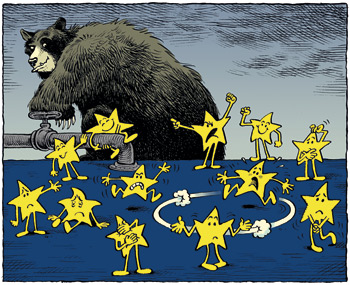
  (Click to enlarge image)


Though behind these arguments lies the main reason. Russia has always dominated the energy supply of the eastern European sector, and Ukraine knows this too well. Vladimir Putin has also imposed heavy custom checks on Ukrainian imports creating losses in the billions in theory. Embargoes from chocolate to steel pipes were also imposed upon goods this year and Mr Putin goes further on this, with forwardly stating that the Customs union as a whole may impose high levies in order to protect the Union for EU goods possibly entering their market.
The Payoff for Russia is vast. Not only does it secure a competitive advantage of trade with the Ukraine and cuts off basically its trade relations with the EU. It further tightens its power over the former soviet state and overall makes it ever so more dependent on Russia.
Vladimir Putin is also winning powerful game with the EU over its diplomatic procedure. That in all the EUs democratic ways are rather pointless in competitive arguments, as even if the Ukraine in someways would prefer to be courting itself with the EU commission, it still has to get into bed with Moscow. But this is by far not the first major hit by Russian Bear: slowly but surely it is geographically taking back its land.

It is amazing the unfortunate though inevitable power that strategic reason can have in undemocratic environments, but it is a good example of how maybe technocratic procedures could eliminate these problems for the EU, as it battles several fronts. Banking unity, Soverigen debt restructuring, migrational issues and strategic economics.

Tata for now
G.E.