Showing posts with label japan. Show all posts

Wednesday, 21 November 2012

The tale of two Islands in Asia

We are a week into the glimpse of China's new management board, upon the stage for China, seven suits encased with red ties stood before the world.


Mr Xi Jinping is now leader of an >80m Chinese communist party with his six new team members at the helm also, however attending the congressional announcement was former president Jiang Zemin. He was there for one reason only, to reassure the world, that as much pressure china's political system is under to become democratic, it will not cease. Mr Jiang actually got more attention due to this, compared with the new president at the congressional announcement, as Mr Xi is seen to be more open in a rational sense to changes within the political system.


This would be honey to the ears of Japan, as it announces it largest trade deficit with China, and this is not due to organic economic slowdown, it is down to a bunch of islands that Japan purchased. This has now led to negative growth in nearly two quarters, ergo Japan will be declaring a recession. Though even with a slightly easier going president, that's not to say members of the old school are not present in the other six.

Going to Behavioural and Strategic impact. The US has taken a very notoriously cunning step and in some ways it will overall benefit China. The US shifted the fire-power of 40,000 troops to conduct exercises   in the area, in a mutual indication to China, that it would standby Japan to defend it's territory, as Japan and the US have a treaty on defence of each other.
However at the same time, the US will now be overtaking Japan as largest export partner to China. So throwing a few 40,000 troops in an area to keep Japan happy for a while, whilst you take over their trading position is quite a good deal.
But it is just not the US that are conducting strategic positioning  China is producing bilateral trade agreements with South Korea, so to anyone's guess, economic pressure is fully being exerted onto the sword of the samurai. In return Japan is attempting trade agreements with the EU and Australia, regardless it will loose out.
Though it's not all sunshine and butterflies for the red flowers.
China's investor arms are going into the emerging markets, as western traders start getting bullish with their Chinese weighted portfolios. They seek non domestic protection, and as much as China racks on more tax incentives and lifts investment barriers, non of this is being seen to make a world of good; only behavioural investment sense of desperation, just making traders increase their bet values against China.


So China is plotting the downfall or economic suicide of Japan with its sustainable deficit of +200% of GDP.
Though it could be worse... You could be Greece, having to deal with your politicians not agreeing with the death dealers aka IMF and the EU, which just entered negative growth also. http://www.ft.com/intl/cms/s/2/0a35504a-0615-11e1-a079-00144feabdc0.html#axzz2CnY7xTPX

Whilst you then have to watch energy companies pay fines, of larger sums that what your country so desperately needs.
http://www.ft.com/intl/cms/s/0/555fa13c-2f46-11e2-8e4b-00144feabdc0.html#axzz2CnY7xTPX

Positive economics combined with the church of monetarism and Hayek. It lacks so much irrational emotion in these scaring areas, its hard to believe this is how economies work the best!!
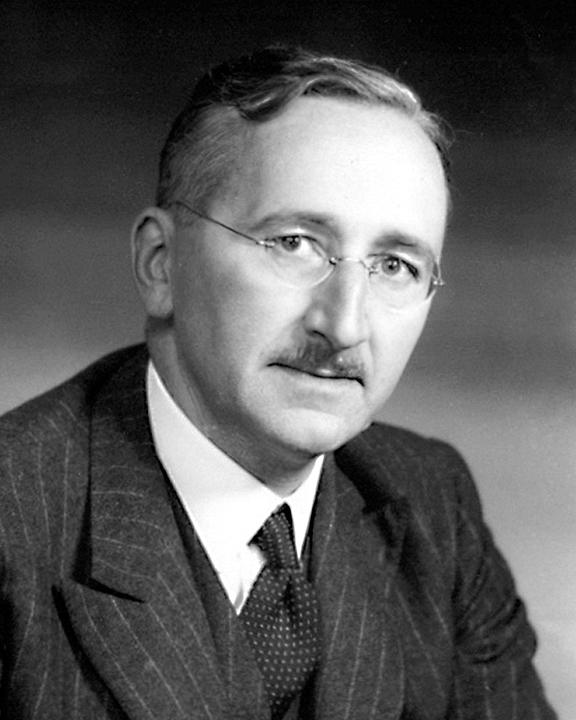
Tata for now... GE


Friday, 18 November 2011

2025...The period for nuclear & renewable energy

I'm taking a mini break from the EU as the Financial Times this week has been reporting on the nuclear debate going on around the world currently, after the Japanese earthquake produced our second largest nuclear energy industrial incident. Not only that I was also invited to attend an ecological economics speech yesterday where nuclear was condemned (as well as positive economics & monetarism which is really two my economic areas). So I thought about giving my opinion, mixed in with scientific facts.

We cannot smell it, feel it; though we breath it in, it tans our skin, it's in the food we eat; it is there and that is what radiation is, the invisible particles of life. It has been there all our lives, from the sun, the earth, from atomic testing to the medical industry, but why are we scared of it?

My main three points about why people are against anything with the elements, are nuclear waste and nuclear destruction, be it weapons or meltdown. Though I feel a lot of the science is left unspoken, and facts can be larger than words, so here I go at trying to balance out the atomic debate with some economics as well.

The Science
Background radiation is everywhere and the biggest contributor is Radon, which comes from decaying elements in rocks within the earth's crust. Radon is approx 50% of background radiation and gamma and beta from the same decaying in the ground is 14%. 12 % is internal, what this means is we are technically radioactive as we have carbon -14 inside us, not only that, but what we eat has C-14, radioactive potassium as well as other radioactive elements inside. The next is the Cosmic, that's 10% contributed by space.
So...we have approximately 86% of radiation today being non-man made.

Man Made Radiation
The biggest man-made contributor of radiation is the medical industry...12%.
Air travel contributes 0.4%, fallout 0.4% occupational 0.2% and nuclear waste <0.1 %. This is all by the way up to present day factual numbers, from the UN, NAEA.

The Dangers
I really hate going into this topic as it is very sensitive for me on both sides valuing any loss in life is worrying area for me, but sometimes it has to be shown.
There have been many more and troubling disasters outside nuclear energy, the nuclear medical industry and other areas are much more worrying, here are examples:
http://en.wikipedia.org/wiki/List_of_civilian_radiation_accidents
My point here is that medical contributes more to background radiation, though we don't scrutinise x-rays, cat scans or cancer treatment?
And the horrible summary is that I have seen what oil has done to some poorest areas of the planet pollution wise in real life. We don't want to see it, smell it, touch it though we are addicted, that is what oil is for modern society and how many people have died due to it?

The Economics
My main concern is Germany's promise to scrap nuclear reactors by 2020. The funny thing is, to make up for that loss in nuclear, you have to build more coal fire power stations, which actually give out more radiation than a nuclear power station as well as carbon dioxide which then in turn goes in global warming. They are creating more wind farms and other renewable sources, but the energy production of wind turbine is so small, compared to energy demanded, it is an unrealistic approach and is very expensive contributor to the rise also in energy companies increasing their bills, as well as the price of oil being more susceptible to shocks and increasing due to demand and supply.
People right now and in future years cannot afford this until technology in the renewable sector improves and governments can afford to run deficits.

Conclusion
My goal is not to say we should be Nuclear forever, but when you have depleting highly demanded natural resources. A society which is going through depleted income, that will eventually have to pay more continuously for energy. A time where new nations demand more energy, and geopolitics becomes more powerful... To look away from Nuclear is really a scary mistake I feel.

Renewable energy is the future beyond a doubt, within 5-10 years we most likely will have fusion near perfected for power generation testing, and wind energy being actually cheap in a competitive market. That is where the future lies, but to jump on the green band wagon completely does not make sense from an environmental and economic point of view.